
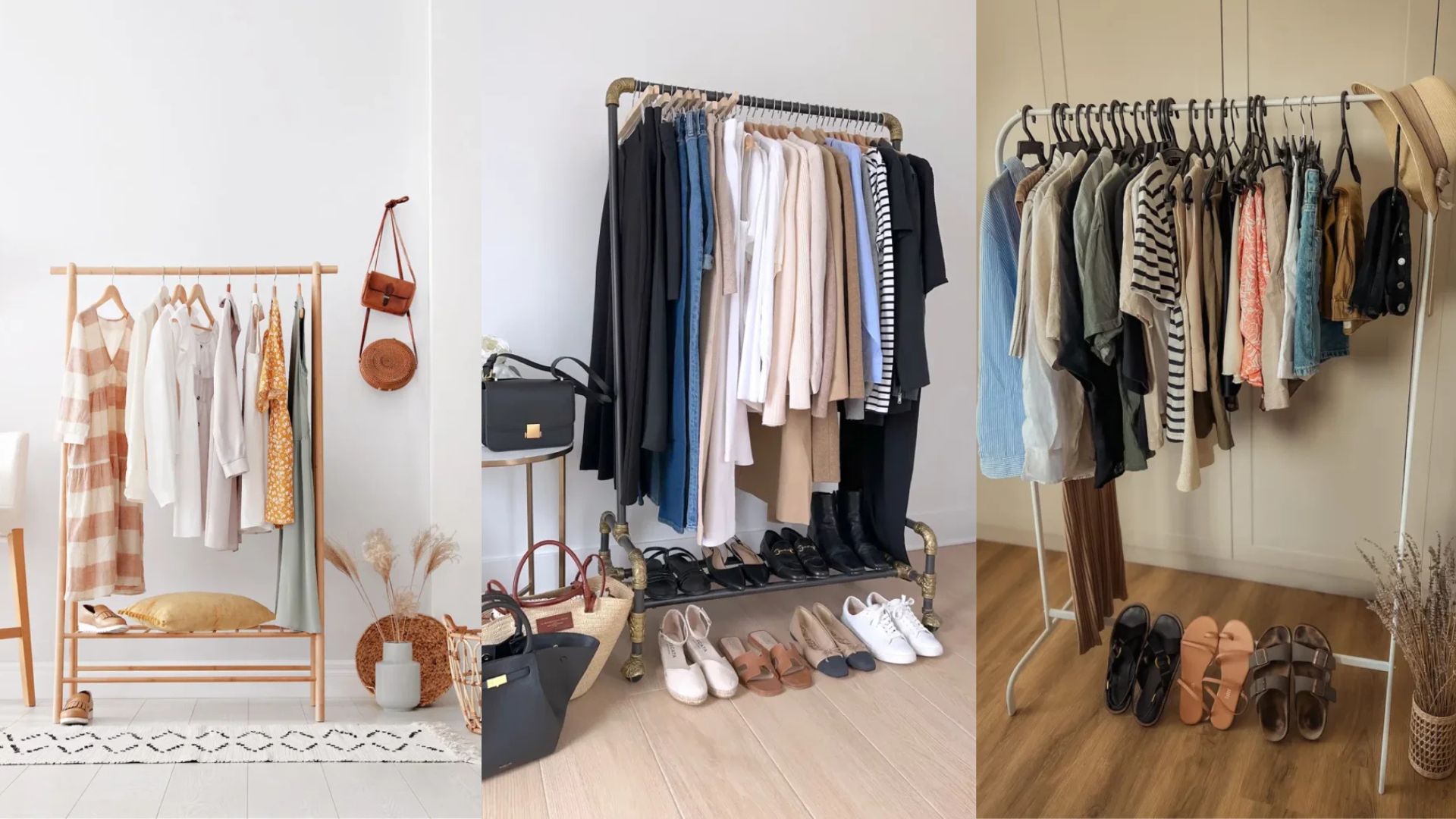
25 Minimalist Wardrobe Ideas for Petite Women Who Want to Simplify
A packed closet doesn’t mean more outfits, it usually means less clarity about what to wear. For petite women, the problem compounds: too many pieces in too many proportions makes it harder to see what actually elongates the frame and what just adds visual noise. A minimalist wardrobe for petite women isn’t about owning less for the sake of it. It’s about owning fewer, better proportioned pieces that work together on repeat.
This list pulls from real closets and fresh minimalist wardrobe petite women alike, covering everything from how to hang and store pieces to which fit details matter most on a smaller frame. Some ideas focus on organization, some on styling proportion, and a few on the habits that keep a wardrobe from creeping back into clutter. Whether the goal is a full closet reset or a few small swaps, there’s a starting point here that fits.
1. Group Your Closet by Color, Not Category
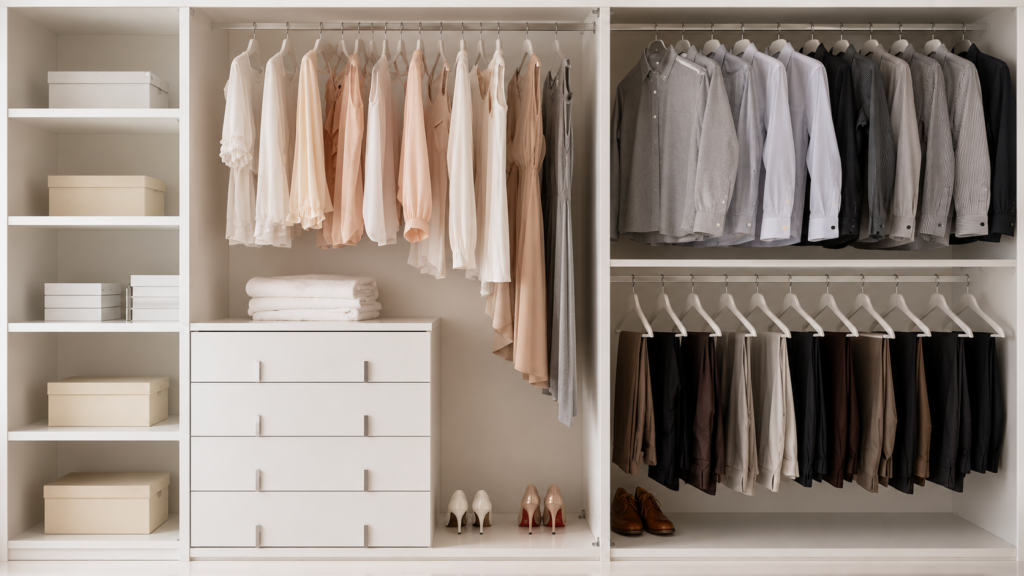
Open any closet in five seconds and know what to grab. That’s the real win here. This closet keeps blush, cream, and soft grey together on one side, then shifts into structured button-downs and trousers on the other. For a petite frame, this kind of grouping does something practical: it makes it obvious which pieces share a tone, so building a monochrome outfit takes seconds instead of minutes of digging.
Sort hangers left to right by shade, lightest to darkest. It turns “what goes with what” into a visual habit instead of a guessing game.
2. Let Neutrals Do the Heavy Lifting
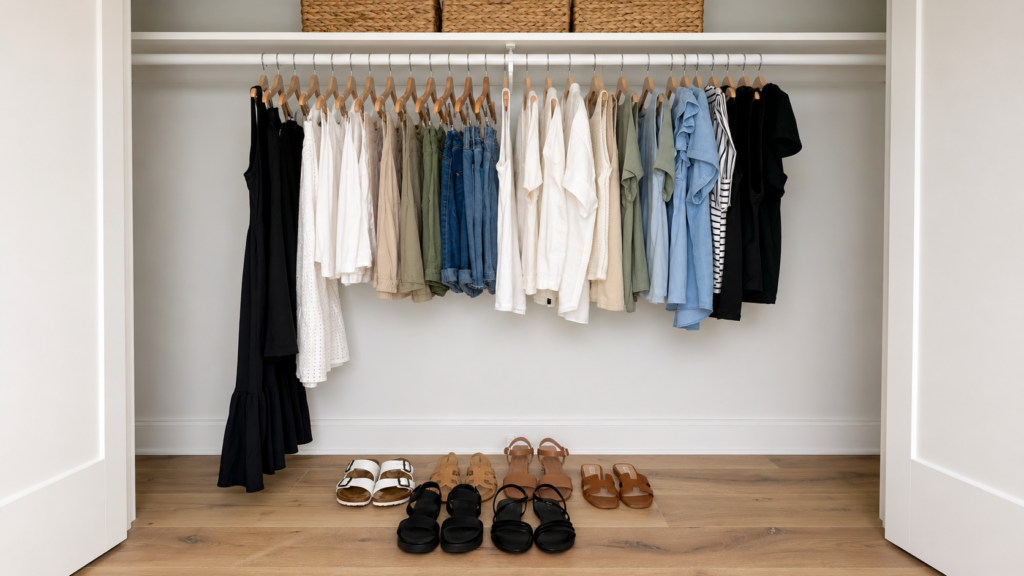
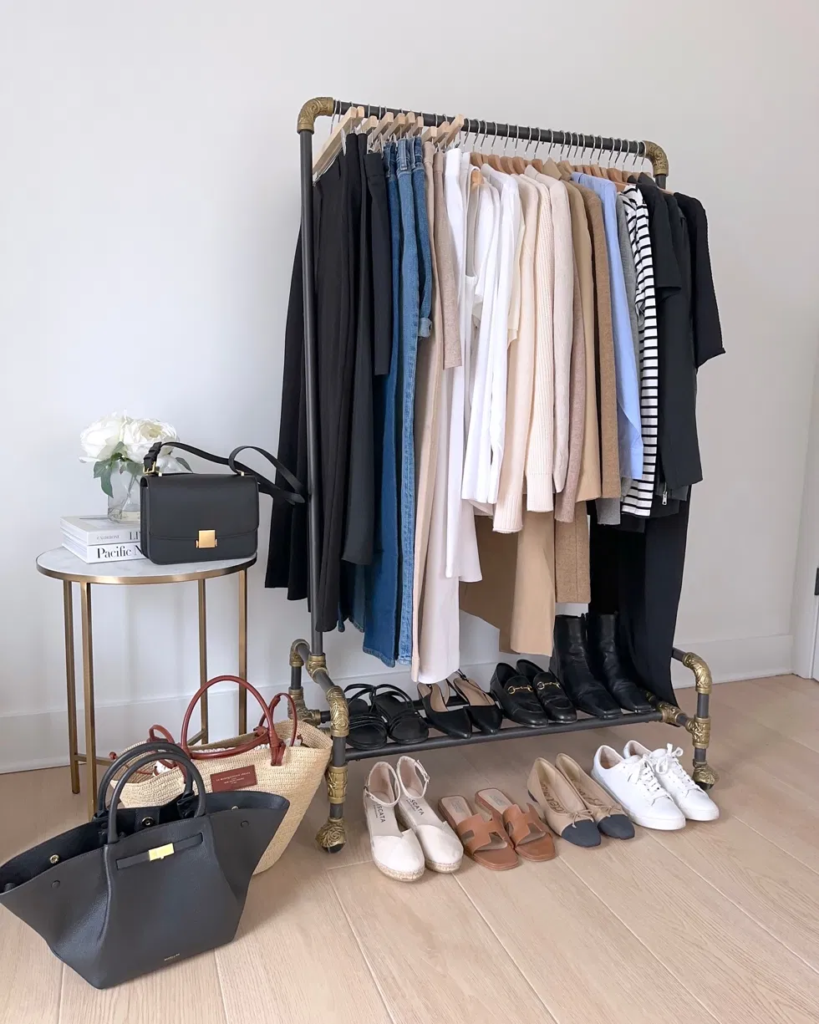
This rack leans almost entirely on black, white, tan, and denim, with a single striped top breaking things up. Nothing fights for attention. For someone under 5’4″, a tight neutral range like this stretches the eye up and down instead of chopping it into sections, which is exactly what busy prints or clashing colors tend to do.
- ●One black dress, worn three different ways with layers
- ●Jeans in a single wash to keep pairings simple
- ●Sandals kept to two or three shades total
3. Add One Statement Piece to Ground a Neutral Rack
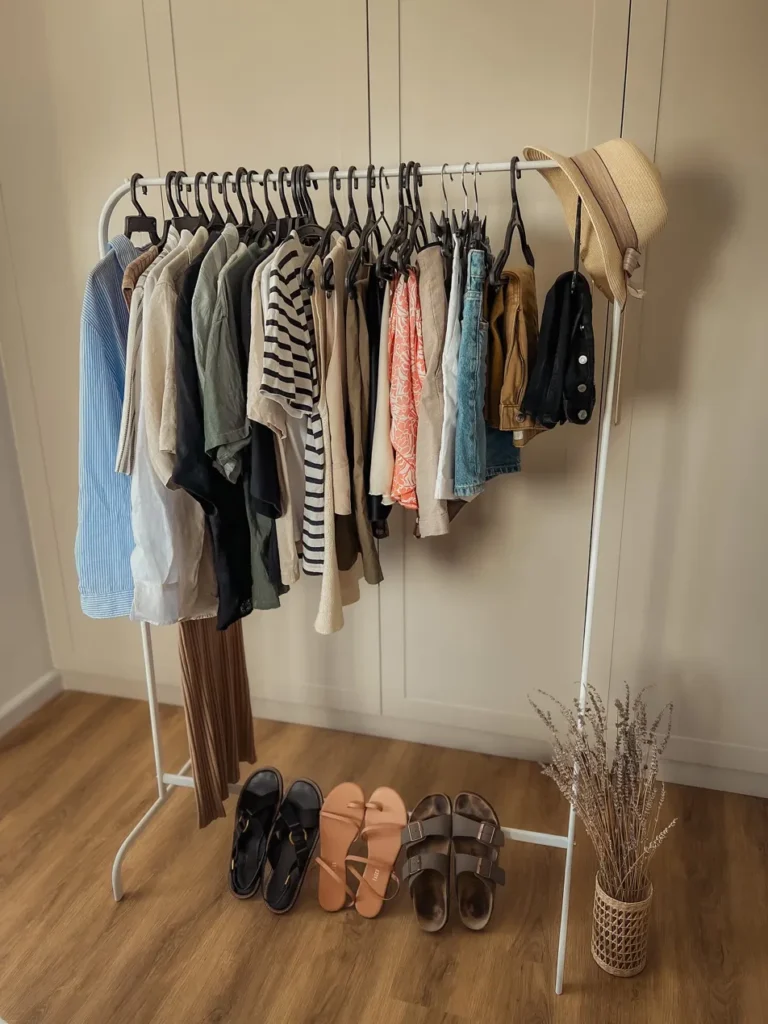
A rack full of soft khaki and cream can start to blur together. Here, a single black jacket and an orange floral piece break the monotony without overwhelming it. A straw hat sits at the end like a punctuation mark. That’s the trick with a small wardrobe: one piece with real presence keeps everything else from reading as flat.
80% neutral basics, 20% one statement item. Too many bold pieces and nothing reads as special. Too few and the closet feels forgettable.
4. Store Delicate Pieces Separately From Daily Rotation
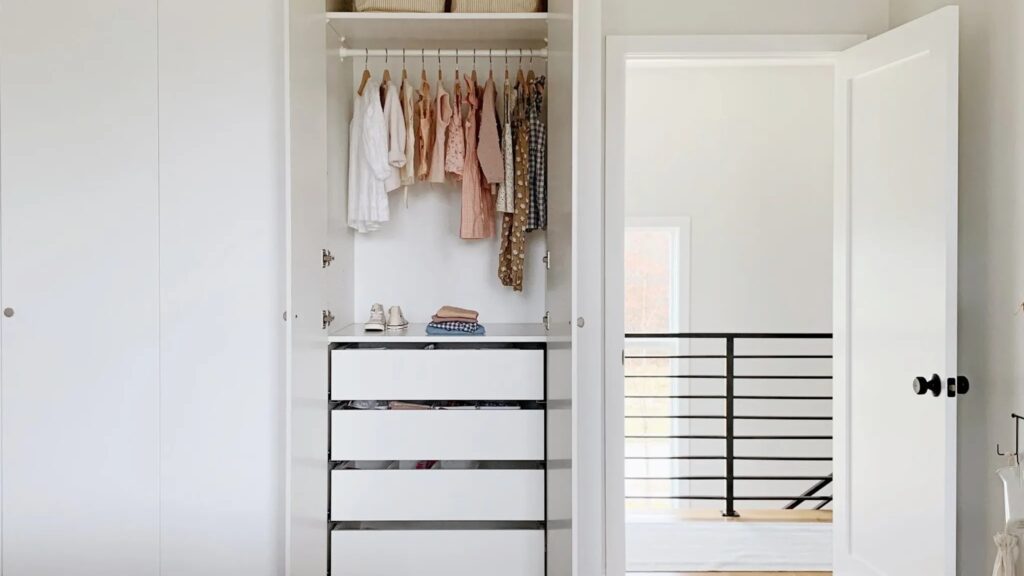
Not every closet section needs to work the same way. This built-in wardrobe keeps a small hanging rail for lightweight pieces up top and drawers below for folded items and shoes. Petite closets, especially shared or small bedroom setups, often benefit from splitting storage this way: hanging space for anything that wrinkles, drawers for the rest.
| Hang | Fold |
| Blouses, dresses, anything sheer | Knits, denim, tees |
| Structured jackets | Loungewear |
5. Build the Rack Around Repeatable Outfit Anchors
Classy & Trendy Attire in Wardrobe
Black trousers. Blue jeans. A stack of cream and camel knits. This rack shows a wardrobe built on repeatable pairings rather than one off pieces. Shoes are lined up below by heel height, bags sit off to the side as the accent layer. Nothing here is trying to be interesting on its own. It’s built to be interesting in combination.
Fewer standout pieces means more outfits, because everything is built to pair with everything else.
6. Use Open Shelving to Force Honest Editing
Fold knits into visible, upright stacks
Line shoes by height, low to high
Stuffing shelves past what you can scan
Mixing seasons on the same shelf
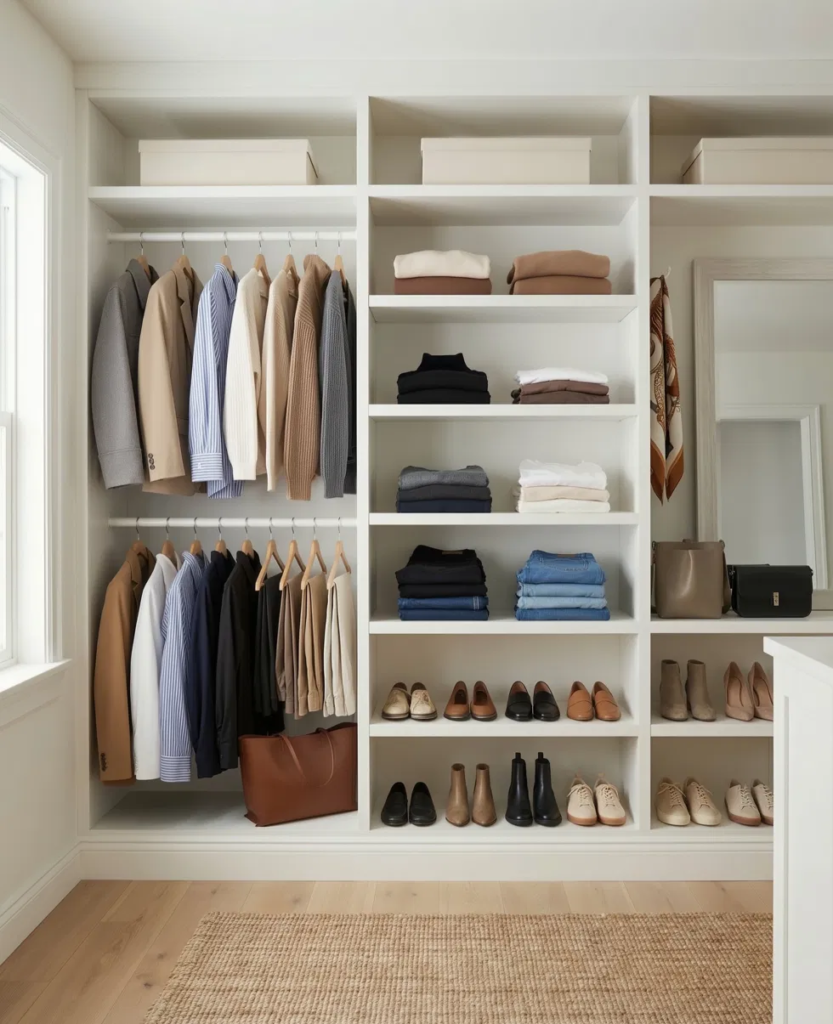
Closed doors hide clutter. Open shelves don’t let you get away with that. This setup folds knits and denim into visible stacks, lines shoes up by color, and hangs blazers where they’re seen daily. For a petite wardrobe especially, visibility matters: a full rack you can’t see clearly gets ignored, while a smaller, visible one actually gets worn.
7. Invest Slowly Into a Small Number of Elevated Pieces
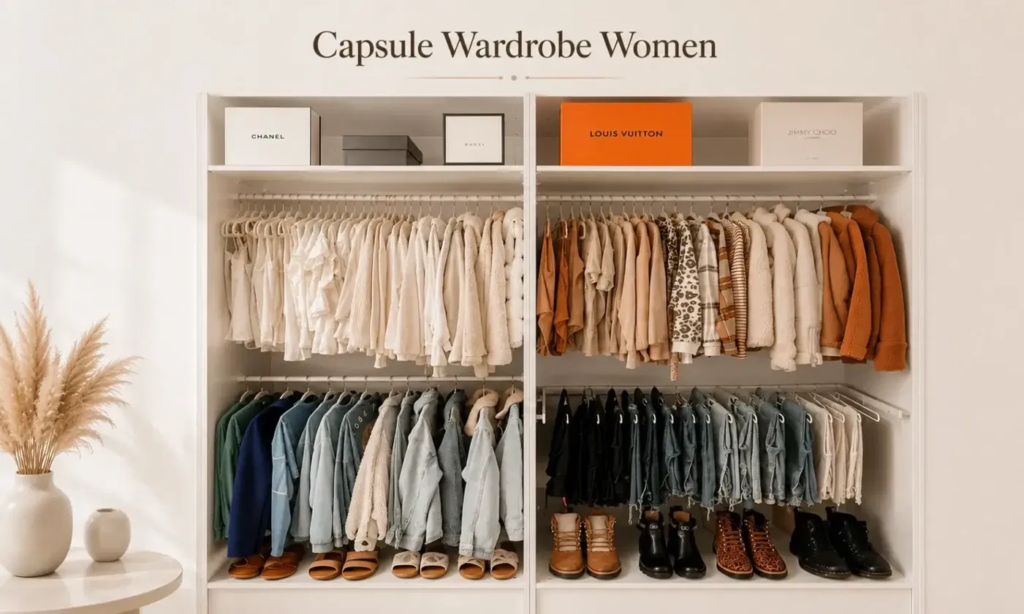
This closet pairs a tight, cream-and-camel color story with a few designer boxes stacked up top, a visual shorthand for “quality over quantity.” You don’t need the labels. The point transfers either way: a petite capsule wardrobe holds up better long term when a handful of pieces are genuinely well made, rather than a full rack of fast fashion that wears out in a season.
One well-made piece per season beats five trend buys. Start with shoes and outerwear, since those show wear fastest.
8. Keep a Warm-Toned Capsule for Effortless Layering
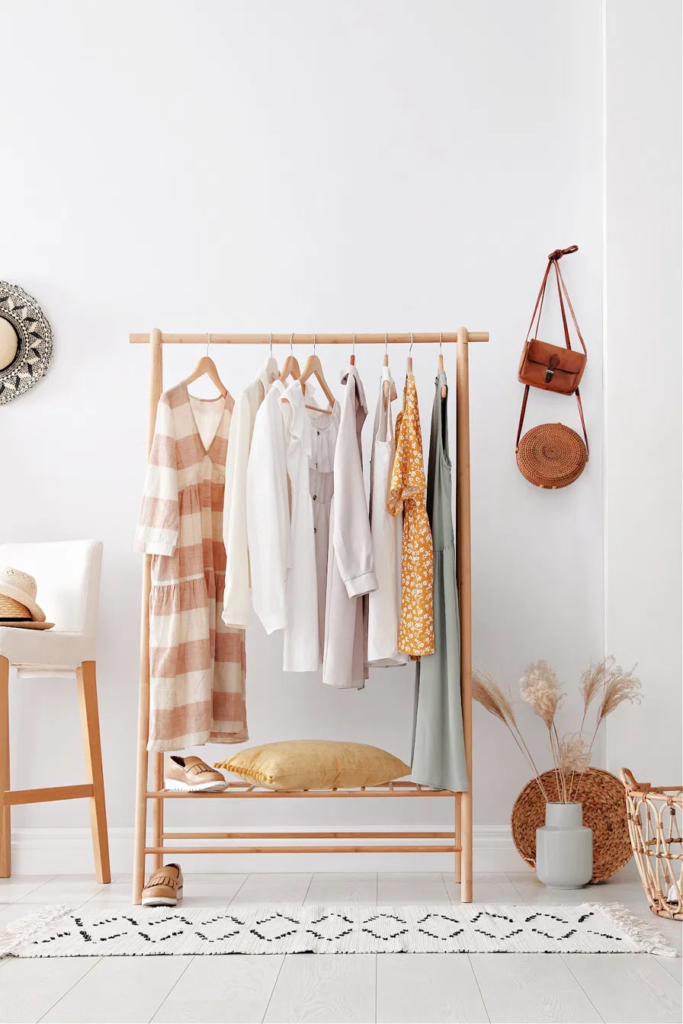
Terracotta, cream, soft mustard, and sage sit together on this rack, all warm and all easy to mix. A woven bag hangs nearby as the one accessory note. This kind of palette works especially well on a petite frame because the tones are close enough in value that outfits blend into one line instead of breaking at the waist.
- ●Terracotta and cream as the base tones
- ●One mustard floral piece for warmth
- ●A woven bag to tie the palette together
9. Style a Tiered Shelf So Bags and Shoes Read as Part of the Outfit
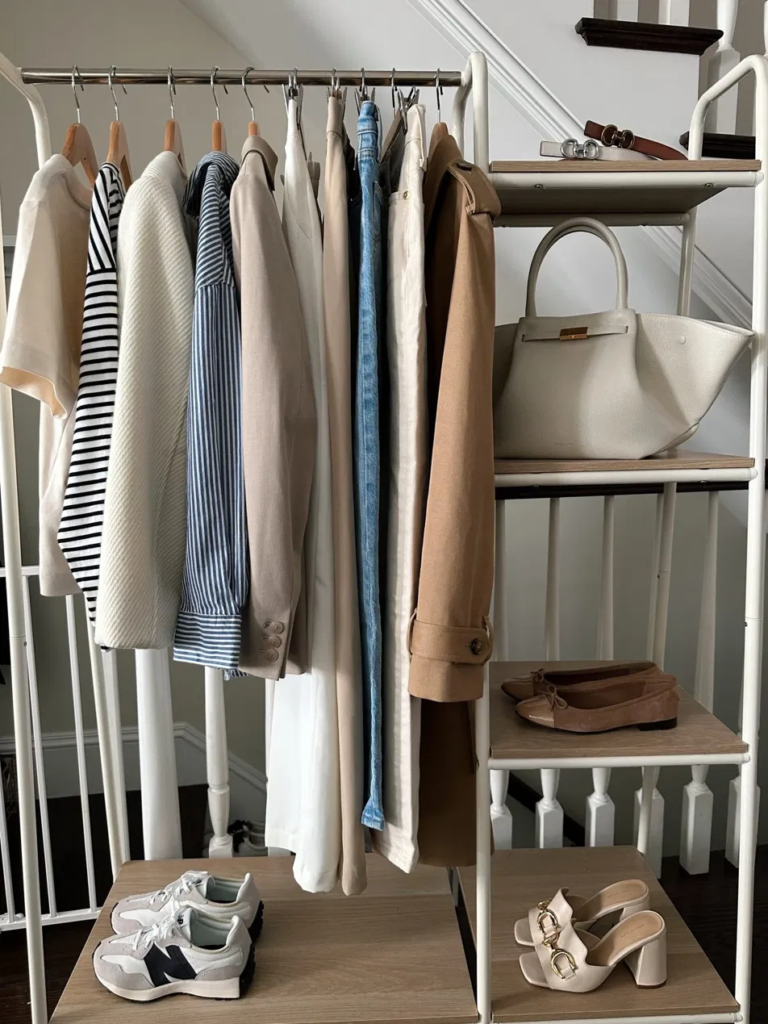
Clothes aren’t the only thing that needs a system. This tiered shelf keeps a cream tote, ballet flats, and heeled sandals stacked right beside a small hanging rail of beige and denim pieces. Everything sits within arm’s reach and in the same color family, so grabbing a full look, top to shoes, takes one glance instead of three separate searches.
| Shelf Level | What Lives There |
| Top | Bags and belts |
| Bottom | Flats and heels, paired by outfit |
10. Grade the Rail Light to Dark for an Instant Visual Flow
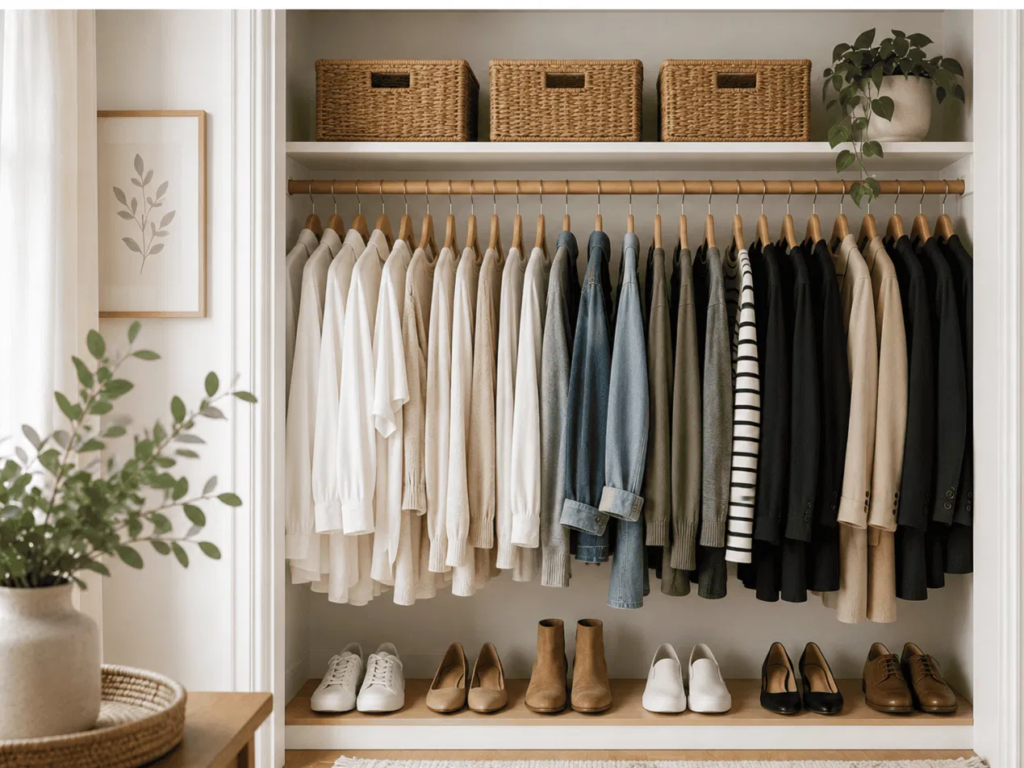
This closet nook does one thing really well: the hangers move from white and cream on the left through denim, olive, and stripe, ending in black and camel on the right. Woven baskets on the shelf above catch overflow items, and a trailing plant softens the whole corner. For a petite wardrobe, this kind of light-to-dark grading matters more than people expect. It keeps the eye moving in one smooth line instead of stopping at a jarring color break partway through.
Stand back and squint at your rail. If your eye jumps around instead of sliding smoothly, regroup by shade before you touch anything else.
11. Build One Capsule Box Per Season, Not One Closet for All Four
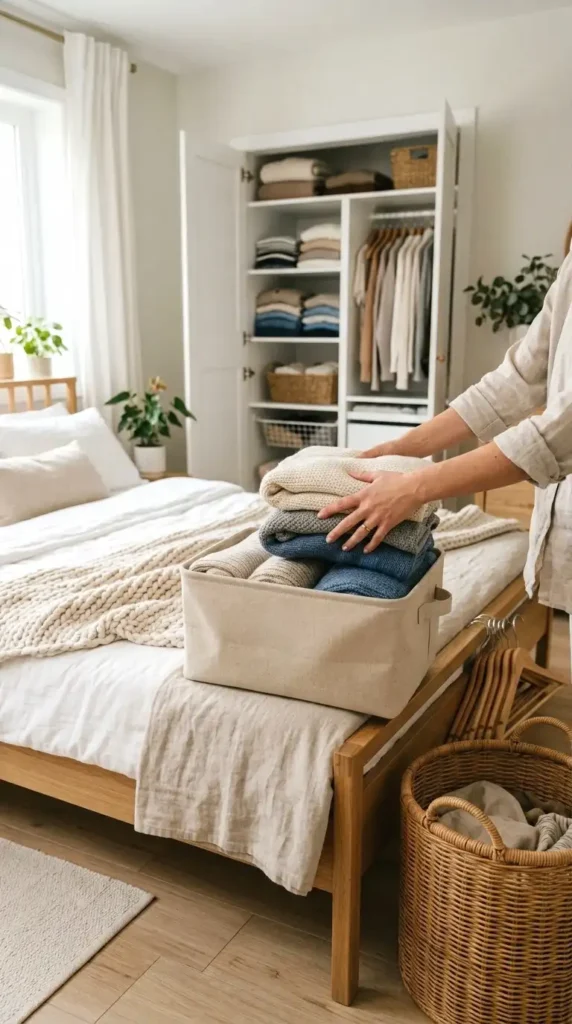
A full closet holding every season at once makes editing impossible. Pack off-season pieces into a labeled bin and keep only the current season hanging. Petite frames especially benefit from this, since a tightly curated seasonal rail is easier to scan and pair than a packed one holding coats and tank tops side by side.
Pick two fixed days a year, one for warm weather and one for cold, and do the full swap both times. Anything you didn’t reach for gets a hard look.
12. Get Every Hem Tailored to Your Actual Height
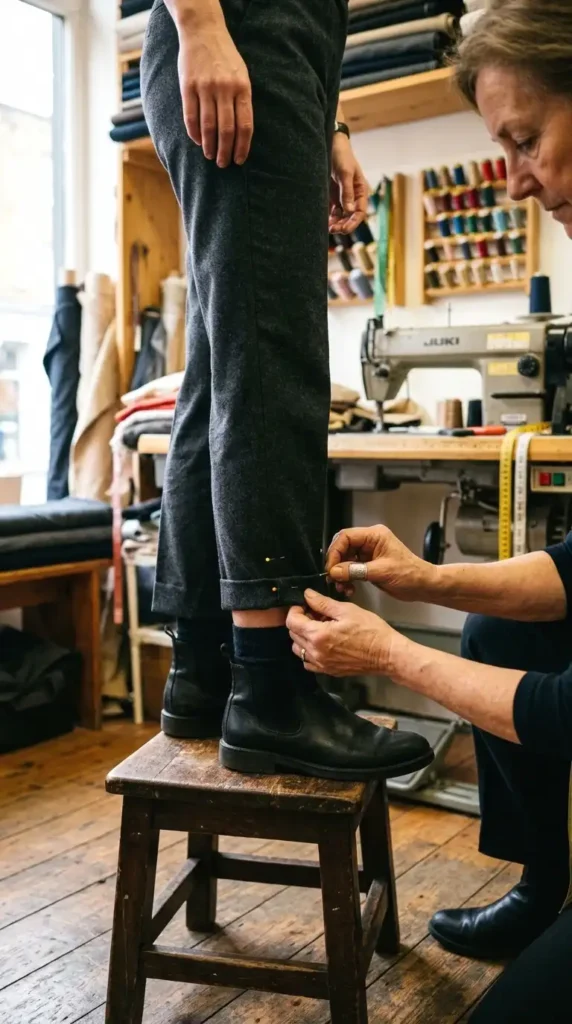
Off-the-rack pants are cut for average height, which usually means extra fabric pooling at the ankle on a petite frame. A simple hem fixes the proportion of an entire outfit in one visit. This is the cheapest tailoring upgrade available and it changes how every pair of trousers in the closet sits.
| Garment | Tailoring Fix |
| Straight trousers | Hem to just above the shoe |
| Wide leg pants | Hem to skim the floor, no pooling |
| Blazers | Shorten sleeves to the wrist bone |
13. Dress in One Continuous Color Column, Top to Shoe
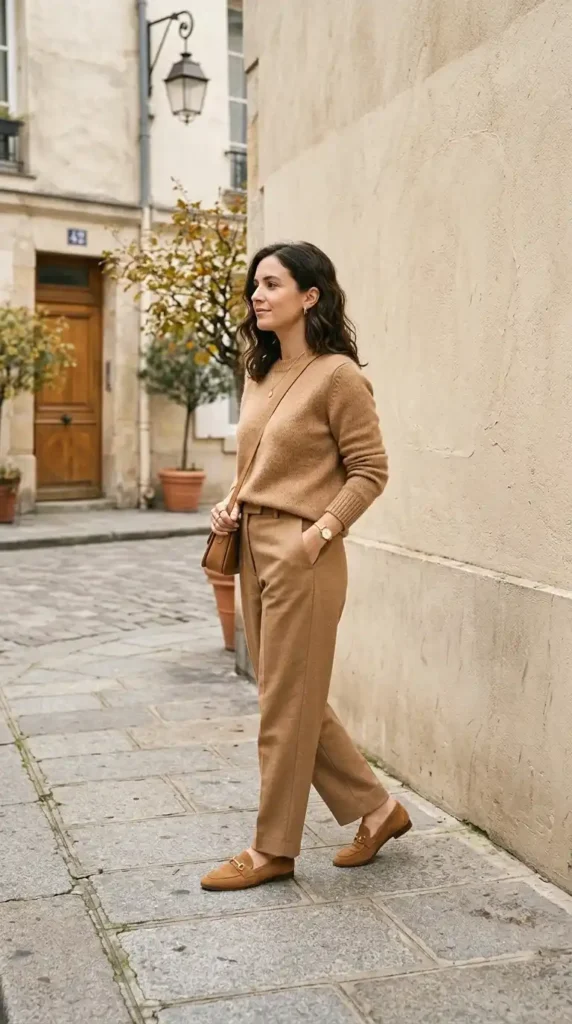
Breaking an outfit at the waist with two contrasting colors visually cuts the body in half. Keeping top, bottom, and shoes in the same tone family instead creates one long line from shoulder to floor. This single trick does more for a petite frame than almost any other styling choice, and it works with any color, not just black.
One unbroken color line reads taller than the same outfit split into two contrasting blocks.
14. Anchor Every Bottom at the Natural Waist
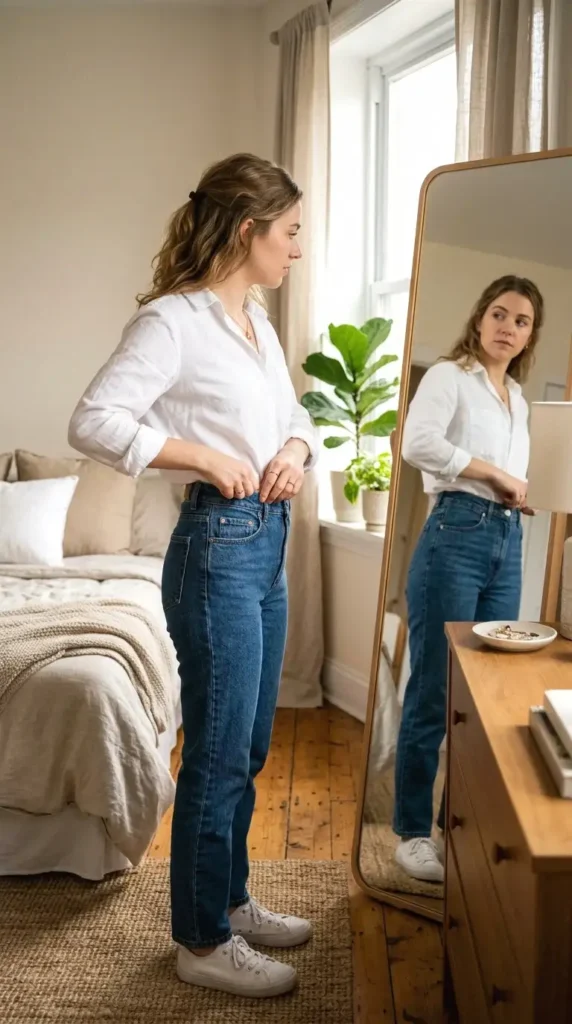
Low rise pants and skirts shorten the visible leg line, which works against a petite frame instead of for it. A high or natural waist does the opposite, giving the leg more room to read as long. This one fit detail matters more than the actual pant style, whether it’s jeans, trousers, or a skirt.
Choose high or natural rise on every bottom
Tuck tops in to mark the waistline
Low rise styles that shorten the leg line
Long untucked tops that hide the waist
15. Choose Cropped Jackets Over Long Ones
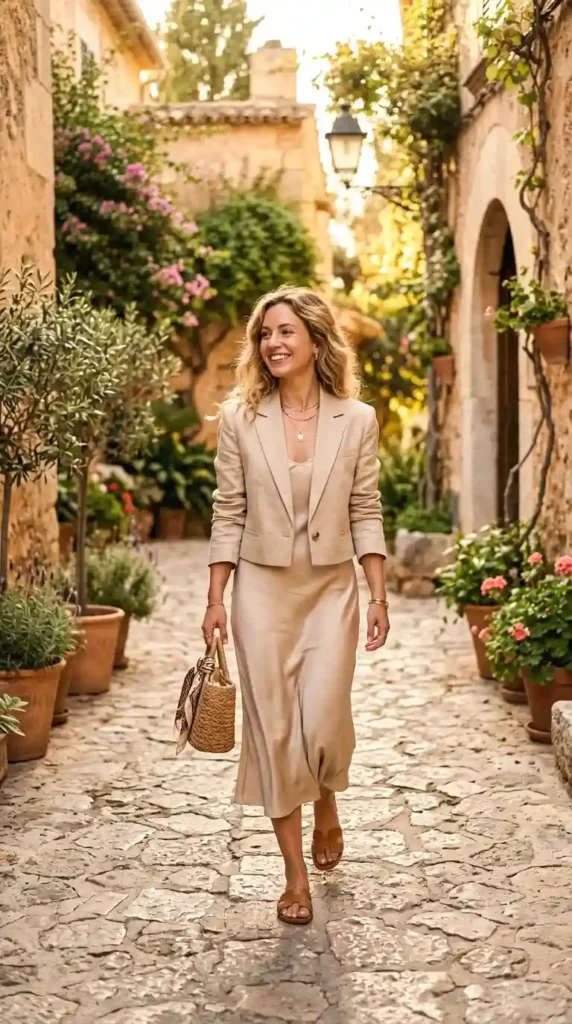
A long coat or blazer on a petite frame often ends at the widest part of the thigh, which shortens the leg visually. A cropped jacket that hits at the hip does the opposite. It’s a small swap in silhouette that changes how proportional the whole outfit looks, especially over dresses or wide leg pants.
- ●Look for a hemline that hits right at the hip bone
- ●Avoid oversized shoulders that swallow the frame
- ●Pair with a wide leg pant to balance the shorter length
16. Follow a Strict One In, One Out Rule

A minimalist wardrobe doesn’t stay minimalist by accident. Every new piece that comes in should send an old one out, no exceptions. This keeps the total count stable instead of creeping upward every season, and it forces a little more thought before each purchase.
Pick the piece you’ll retire before you check out. If nothing comes to mind, that’s usually a sign the new item isn’t necessary either.
17. Limit the Shoe Rotation to Six Pairs or Fewer
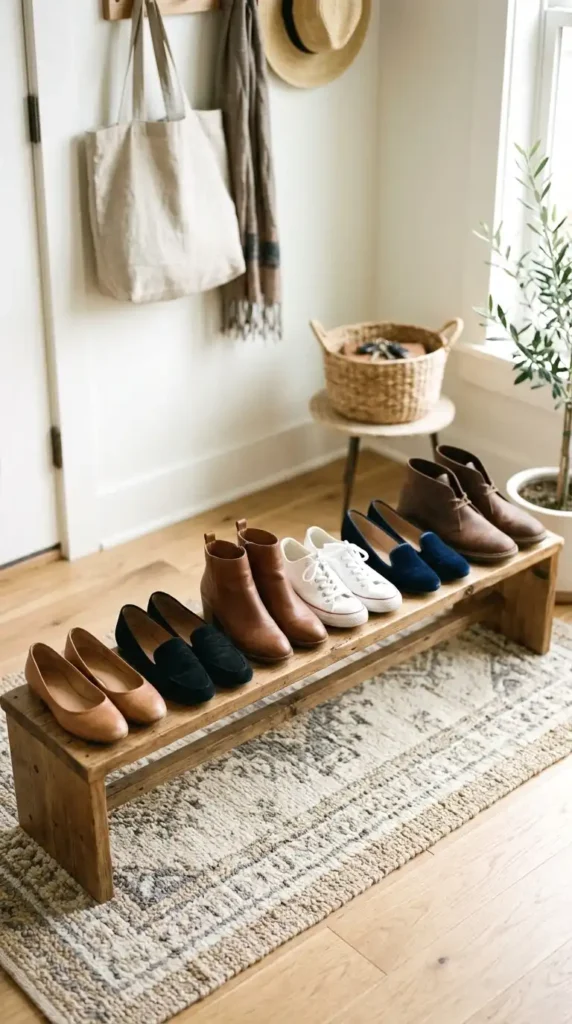
Shoes take up more visual and physical space than almost anything else in a closet, and a petite frame reads cleaner with fewer styles competing for attention. Six well-chosen pairs, covering flat, heel, sneaker, and boot, can carry an entire season without gaps.
| Category | Pick One |
| Everyday flat | Loafer or ballet flat |
| Low heel | A kitten heel or block heel |
| Casual | A clean white sneaker |
18. Pack a Mini Capsule for Travel Using What You Already Own
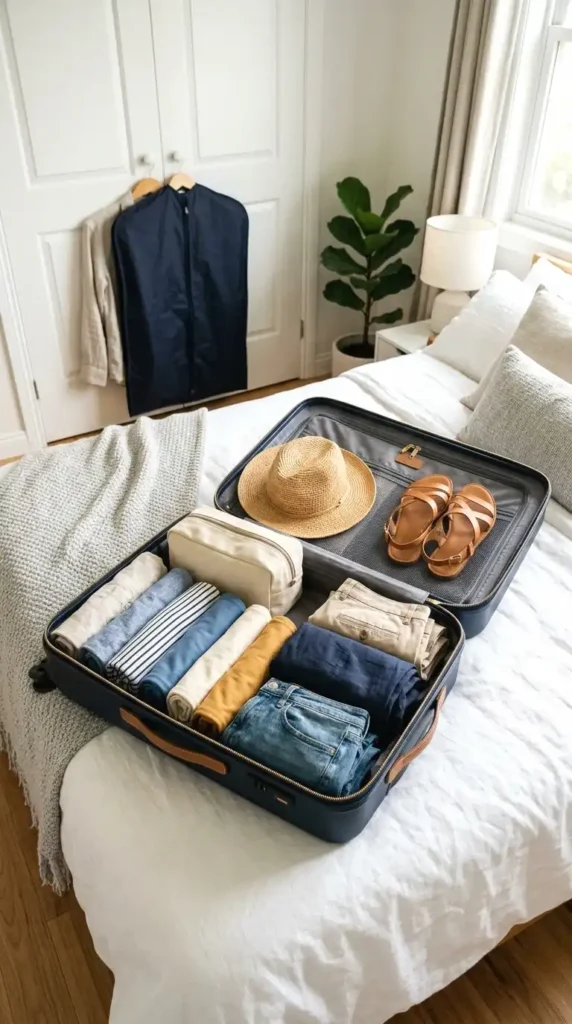
Travel is where an overpacked closet shows itself. Pull five tops, two bottoms, one layer, and one pair of shoes from the existing wardrobe rather than buying anything new, and confirm every piece pairs with at least two others before it goes in the suitcase.
A packing list built from your own closet proves the wardrobe already has enough range without adding a single new item.
19. Layer Short Over Long to Add Height, Not Bulk

Piling on heavy layers can overwhelm a smaller frame fast. The fix is proportion, not fewer layers. A cropped cardigan over a longer tank, or a short jacket over a maxi dress, adds visual interest while still keeping one long line running from shoulder to hem.
- ●Cropped cardigan over a longer camisole or tank
- ●Short denim jacket over a midi or maxi dress
- ●Fitted vest layered over a fuller sleeve blouse
20. Build a Repeatable Outfit Formula and Reuse It Often
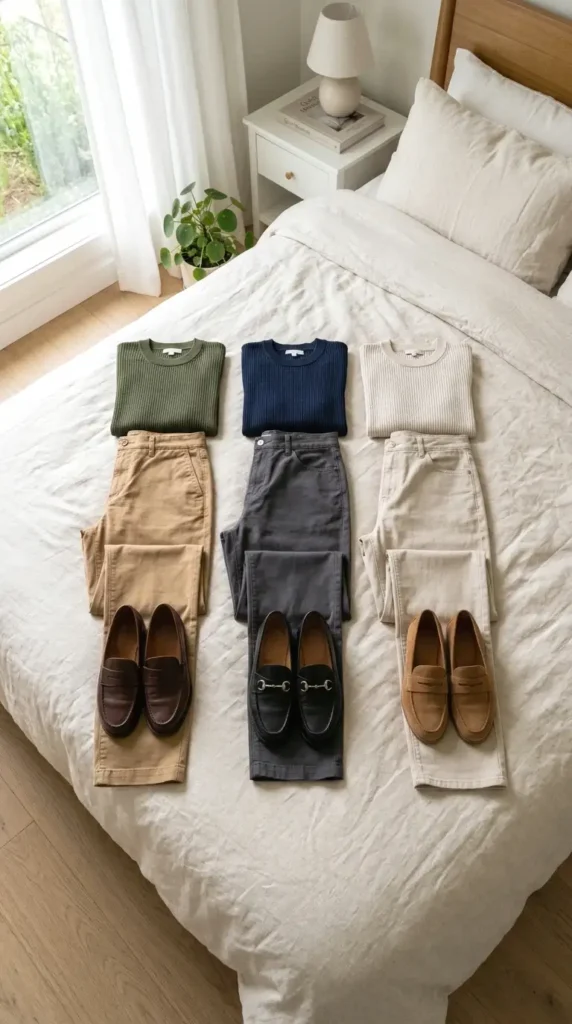
Uniform dressing isn’t a lack of style, it’s the opposite. Pick one formula, like a fitted top plus straight trouser plus loafer, and repeat it in different colors and fabrics all week. It removes the daily guesswork and every version still looks intentional rather than repetitive.
Pick one formula and rotate the fabric and color
Swap one accessory to signal a new look
Reinventing the outfit from scratch daily
Keeping pieces that don’t fit the formula
21. Choose Lightweight Fabrics Over Bulky Ones
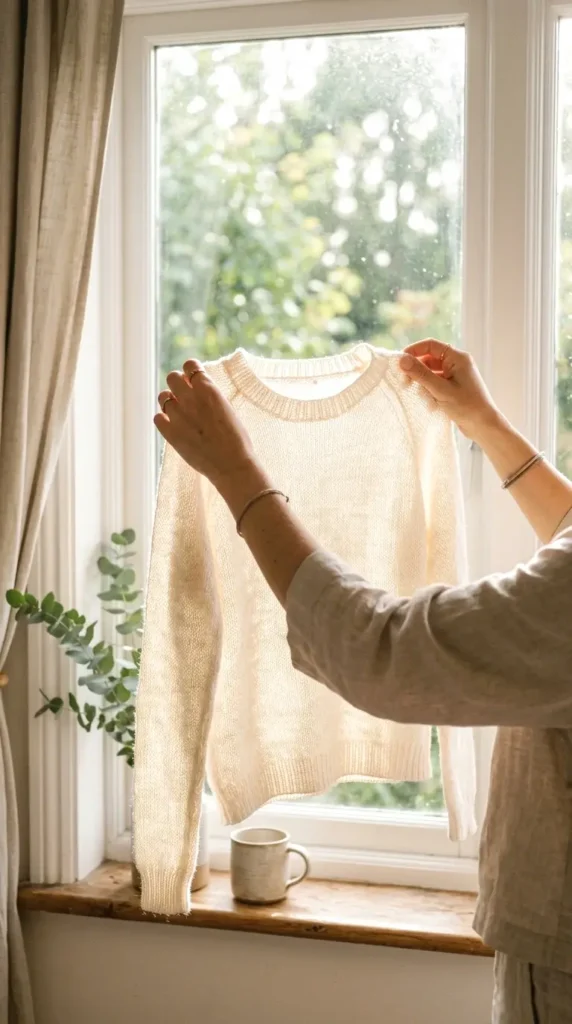
Heavy fabric adds visible weight to a smaller frame, even in a well-fitted piece. Fine knits, lightweight wool, and structured cotton hold shape without bulk, while thick cable knits or stiff denim can overwhelm the proportions. When two pieces look the same on the hanger, the lighter one usually wins.
Hold the garment up to a window. If it barely lets light through, it’s likely too heavy for a petite frame in most silhouettes.
22. Use a Digital Closet App to See What You Actually Wear

A minimalist wardrobe stays minimalist when you can see wear patterns clearly. Photographing each piece and logging outfits in a simple closet app reveals which items get repeated and which sit untouched for months, making the next edit a lot less guessy.
| Track | What It Tells You |
| Wear count per item | What’s earning its space |
| Outfit repeats | Which formulas actually work |
23. Rotate Storage Seasonally to Keep the Rail Honest
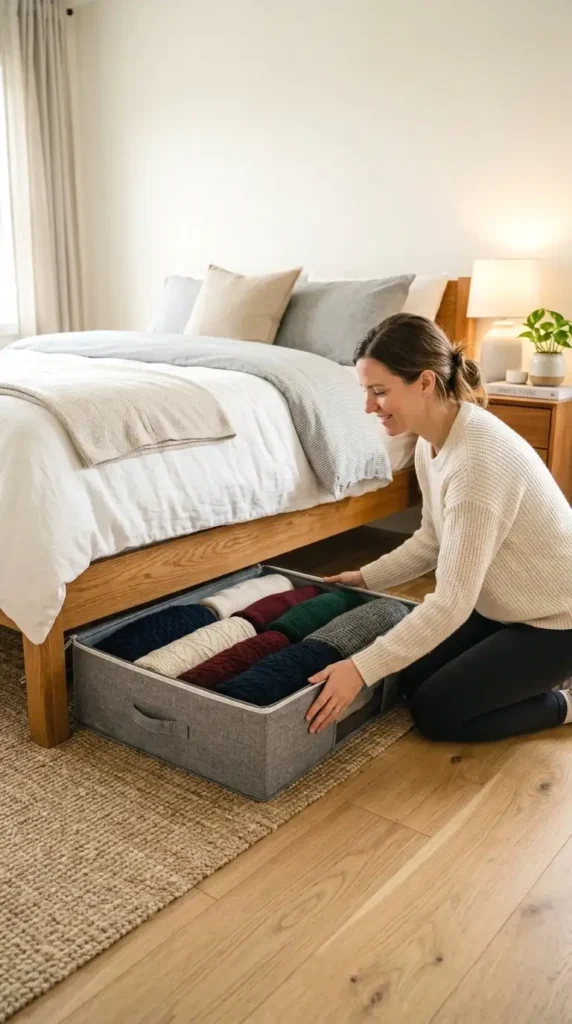
Keeping every season on one rail all year makes the closet feel fuller than it is and buries the pieces actually in rotation. Moving off-season items to under-bed storage or a spare closet keeps the visible rail lean and easy to read at a glance.
A rail that only holds the current season always looks smaller and more manageable than it actually is.
24. Keep a Small Multi-Way Accessory Rotation Instead of Many Single-Use Pieces
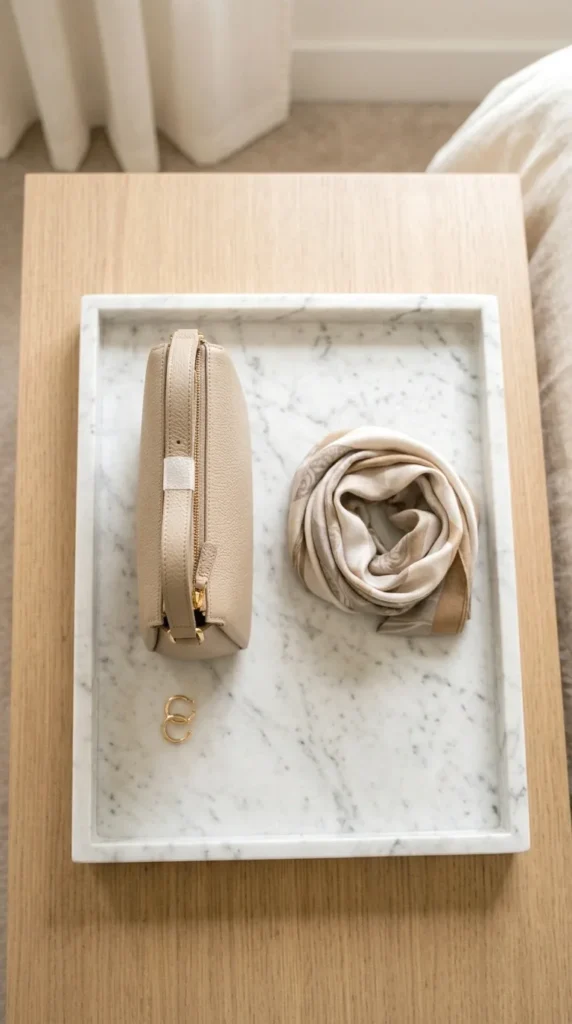
A few versatile accessories do more work than a drawer full of single occasion pieces. One structured bag in a neutral tone, one long scarf that can tie multiple ways, and one pair of statement earrings can refresh the same core outfits without adding closet weight.
- ●One structured bag in a neutral shade
- ●One long scarf that can be worn three or four ways
- ●One pair of statement earrings for instant contrast
25. Take a Photo of the Closet Once a Month to Track Real Progress
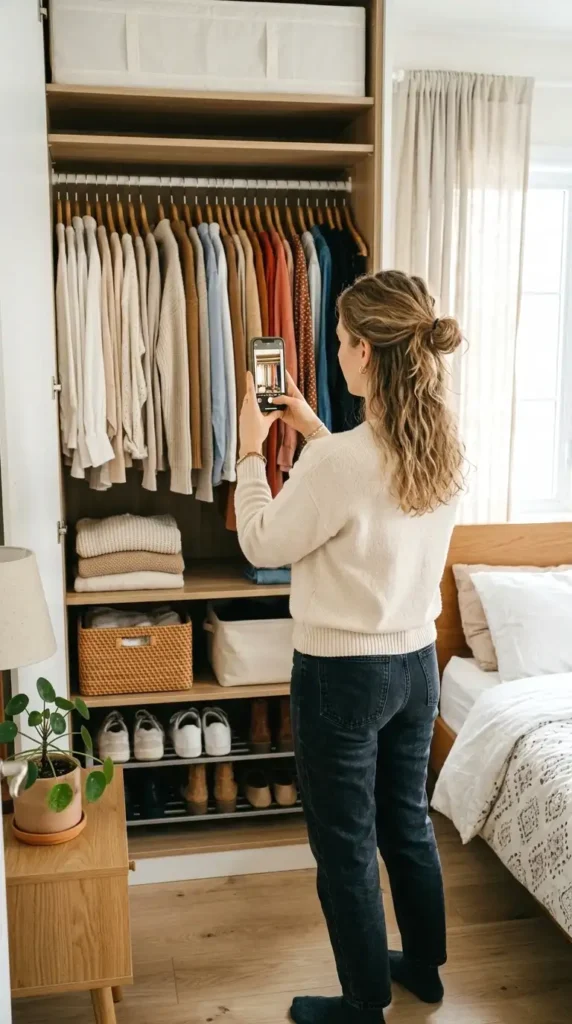
Simplifying a wardrobe happens gradually, and it’s easy to lose track of how far things have come. A quick photo of the closet on the same day each month creates a visual record, showing the shift toward fewer, more repeated pieces over time in a way memory alone won’t capture.
Pick the first of the month, snap the same angle every time, and compare the photos side by side after three months.
Conclusion
Simplifying a wardrobe doesn’t happen in one weekend, and it doesn’t require getting rid of everything at once. Small shifts, a proper hem here, a color-graded rail there, add up faster than expected. The pieces that stay should earn their spot, and the system around them should make getting dressed easier, not harder.
Pick two or three ideas from this list to start with rather than trying all twenty-five at once. Save this for the next closet clean out, and come back to it each season as the wardrobe keeps evolving.