
20 Outfit Formulas Every Petite Woman Should Know
Getting dressed shouldn’t mean fighting your proportions every morning. If you’re under 5’4″, you already know the frustration of a trouser that pools at the ankle or a blazer that swallows your whole torso. The good news is that petite outfit formulas aren’t about avoiding certain pieces, they’re about knowing where the lines should fall. A hem that breaks at the right spot, a waist that gets defined instead of hidden, a vertical seam that runs uninterrupted from shoulder to shoe. These twenty formulas cover everything from cropped layering to belted jumpsuits, each one built around the same idea: proportion first, trend second. Some come from real women who’ve already figured this out on their own frames, and some are fresh combinations worth trying. Pin the ones that fit your closet and start there.
1. The Cropped Vest Over Tee Formula
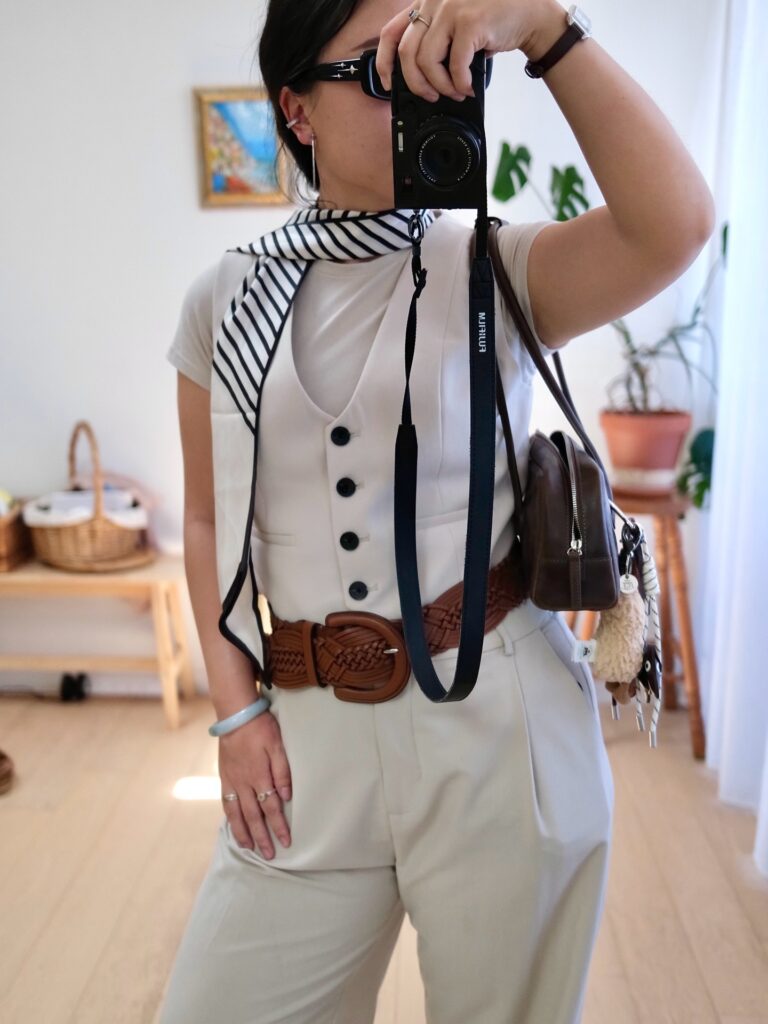
A fitted crop top or tee tucked under a tailored vest does something a full jacket can’t: it keeps your torso short and your waist visible. That’s the whole trick for a shorter frame. Add a wide obi-style belt right at natural waist and the eye reads “long legs” even in straight trousers.
Base: fitted crop tee, tucked
Layer: structured cropped vest, buttoned
Anchor: wide braided belt at natural waist
Petite fix: keeps vertical break above hip, not below
A striped scarf knotted loose at the neck adds a graphic moment without adding bulk to the shoulders, which matters more on a small frame than people think. Skip anything cropped at the hip bone, since that’s the one spot that shortens legs instantly.
2. The Monochrome Coat Drape Formula
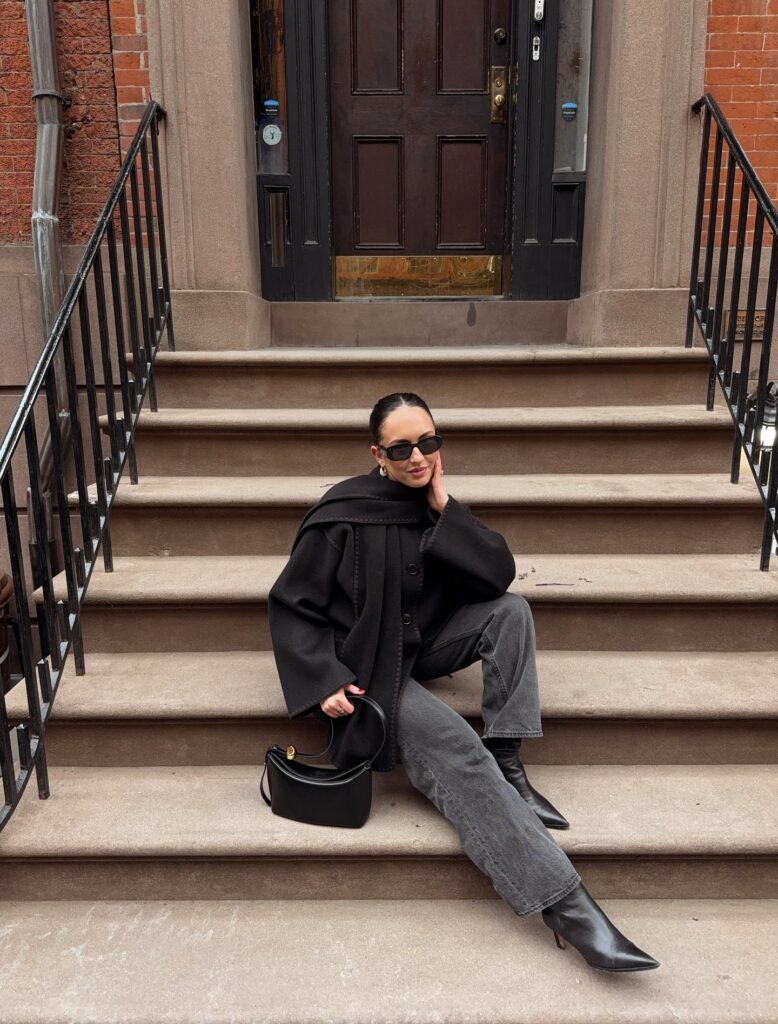
Head to toe charcoal and black sounds like a shrinking trick, and it is, but only if the coat drapes rather than boxes. An oversized wool coat worn open with a scarf collar built into the shoulder line adds volume up top while the pointed toe boot underneath keeps the leg line unbroken all the way down.
| Piece | Why it works on a petite frame |
|---|---|
| Draped wool coat, worn open | Vertical line down center, not a horizontal cut across hips |
| Straight leg jean, slight crop | Stops right at the ankle bone, no bunching |
| Pointed toe ankle boot | Elongates from knee to floor |
| Small structured bag | Doesn’t compete with coat volume |
Skip: a belted coat cinched mid-hip. It draws a hard horizontal line exactly where you don’t want one.
The whole formula works because nothing stops the eye early. Every seam runs vertically until the boot.
3. The Oversized Blazer, Cropped Pant Formula
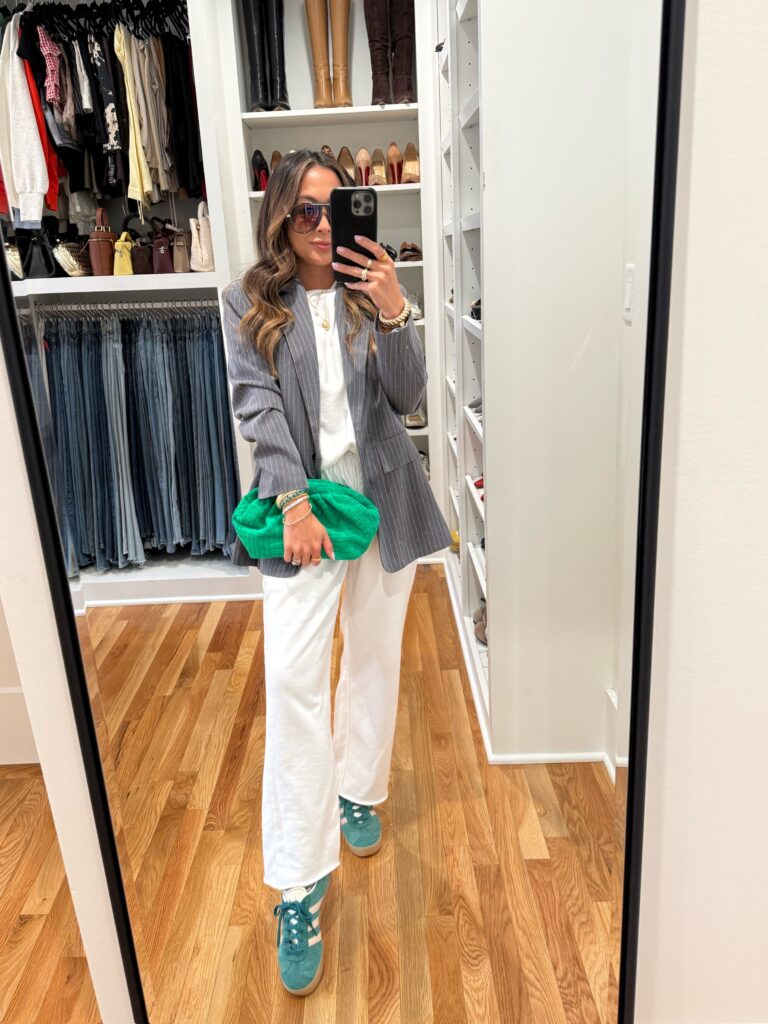
This is the formula that gets misunderstood the most. Oversized on top usually reads as swallowing a small frame, but pair a longline pinstripe blazer with a wide leg pant that stops right above the ankle, and the proportions flip in your favor. The blazer’s length balances against visible ankle, so the outfit reads intentional instead of borrowed.
Let the pant hem sit just above the ankle bone.
Keep the shoe low profile so the ankle stays visible.
A blazer that hits past the hip crease.
A pant that pools fully over the shoe.
A bright bag color, like this emerald clutch, pulls the eye toward the hand and off the length of the torso completely. Small trick, does a lot of work.
4. The Wide Leg Denim, Maxi Coat Formula
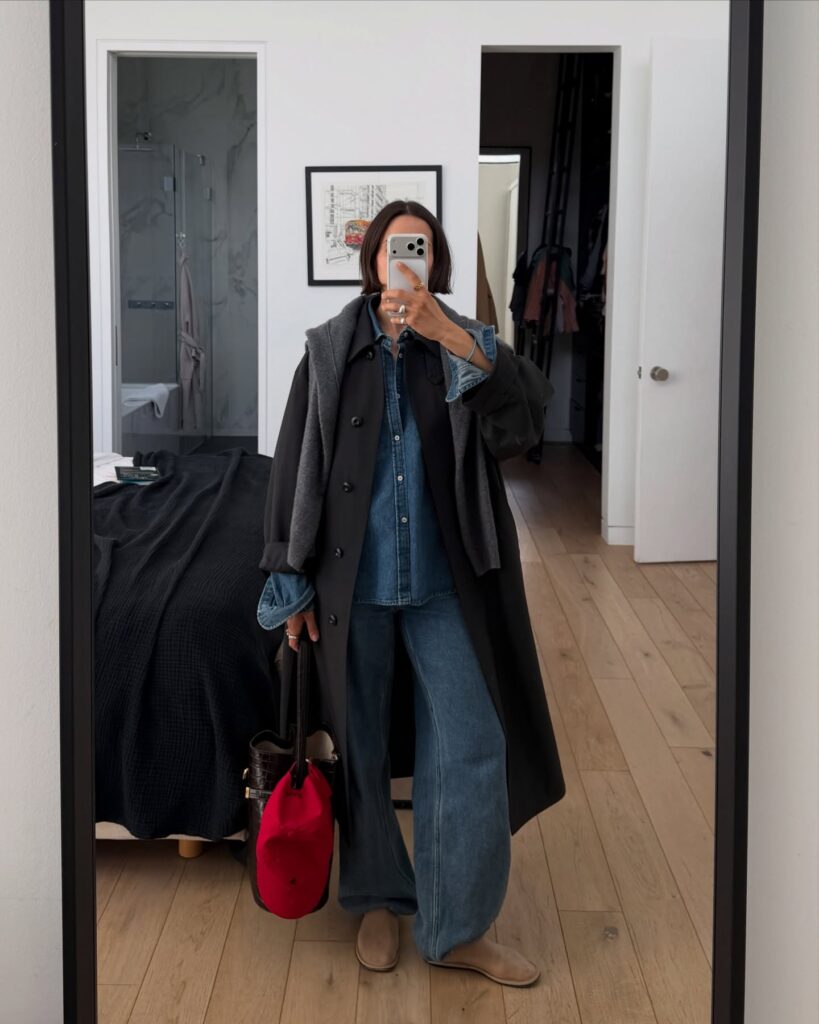
Two long, loose pieces sound like a styling mistake for a small frame, but wide leg denim under a floor-sweeping coat actually works because there’s no horizontal break anywhere. The coat runs straight to the ankle, the denim runs straight to the shoe, and the eye never stops to measure you against anything.
Base: denim shirt tucked into wide leg denim, tonal
Layer: floor-length coat, worn open
Shoe: suede loafer or ankle boot, low profile
Petite fix: hem grazes the shoe, never pools past it
The trick most people miss is the denim-on-denim base underneath. Same tonal family keeps the torso from splitting into two visual blocks, which is what actually makes a petite frame look shorter, not the coat length itself.
5. The Sheer Poncho Top, Midi Skirt Formula
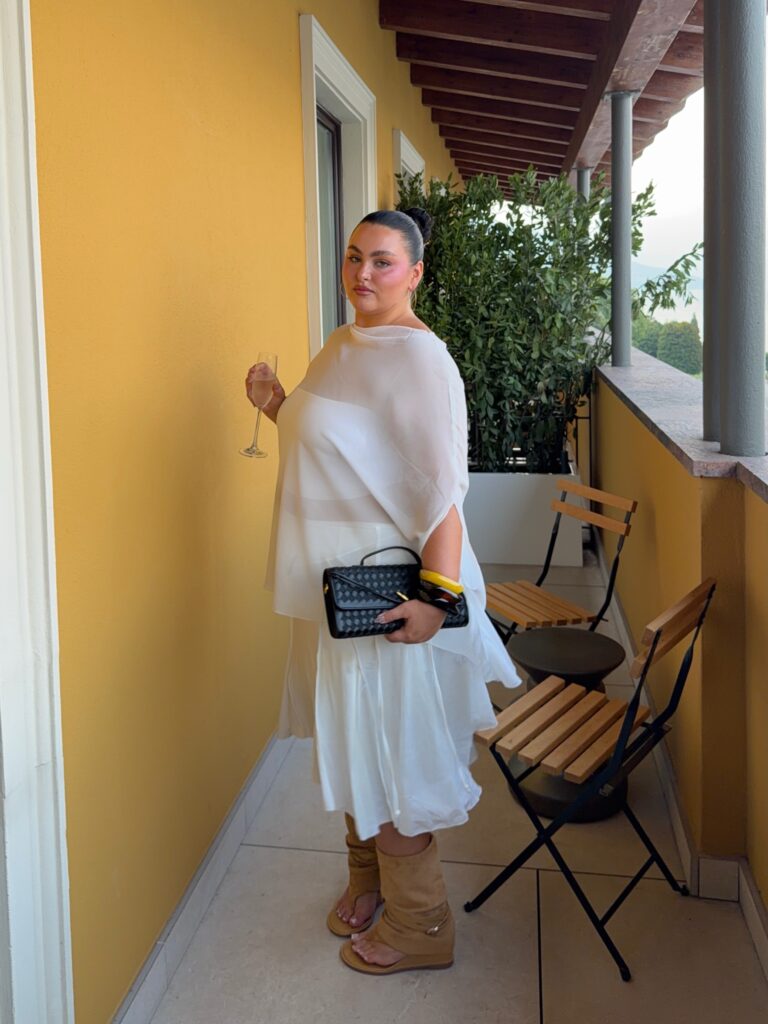
An asymmetric poncho top layered over a slip midi skirt reads elegant instead of shapeless when the hemlines stay uneven on purpose. The high-low cut of the top keeps the eye moving vertically instead of settling on one horizontal line across the body, which matters even more on a curvier petite frame than a straight one.
| Piece | Why it works petite |
|---|---|
| Sheer poncho, side slit | Uneven hem breaks up the torso length |
| Fluid midi skirt | Skims rather than adds bulk at the hip |
| Slouchy suede boot | Keeps the leg line soft, not cut off |
A structured black bag against all that flowy white gives one hard edge for the eye to land on. Without it, the outfit can start to feel like it has no shape at all.
6. The Cropped Blazer, Ripped Straight Jean Formula
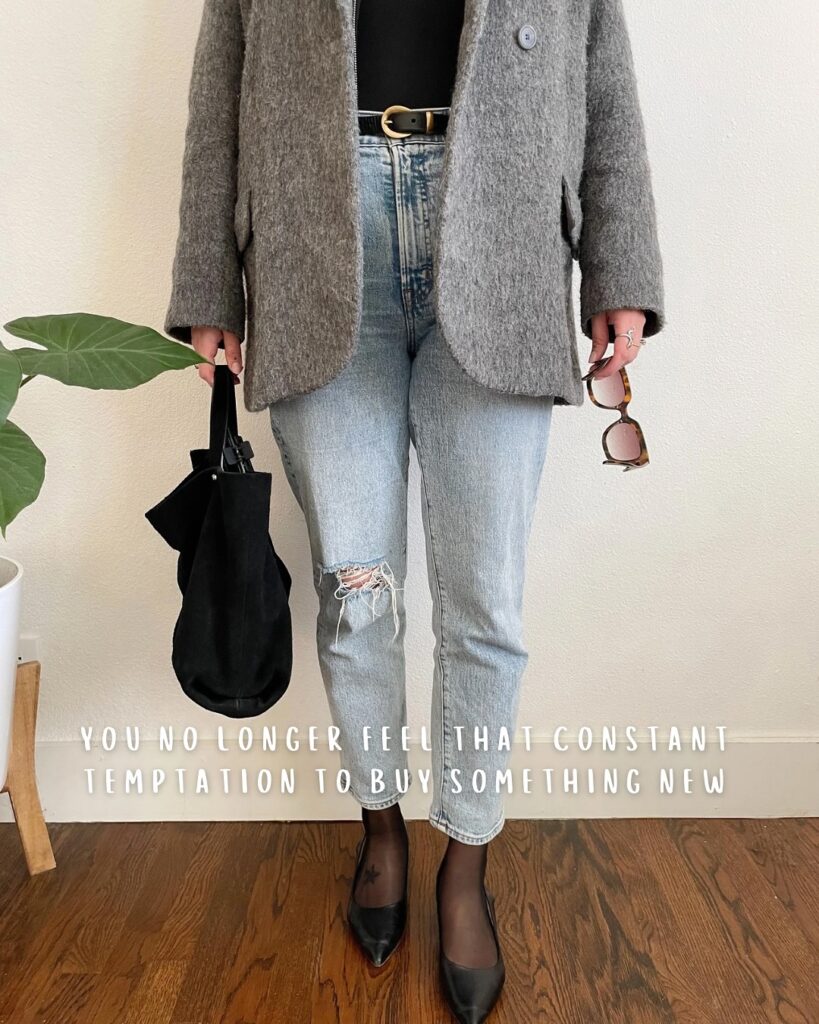
A cropped wool blazer stops right at the hip bone here, which is the exact spot that keeps a petite torso from getting swallowed by outerwear. Underneath, a black bodysuit and a gold buckle belt anchor the waistline so even a boxy jacket silhouette still shows where the body actually curves in.
Base: fitted black bodysuit, tucked
Layer: cropped wool blazer, hits at hip
Anchor: gold buckle belt at natural waist
Petite fix: straight leg jean, hemmed to break right above the shoe
Sheer black tights under a pointed pump close the gap between hem and shoe, so there’s no bare skin interrupting the line down to the floor. That continuous column is what makes a straight leg jean read long instead of stubby on a shorter frame.
7. The Cropped Tweed Jacket, Straight Leg Jean Formula
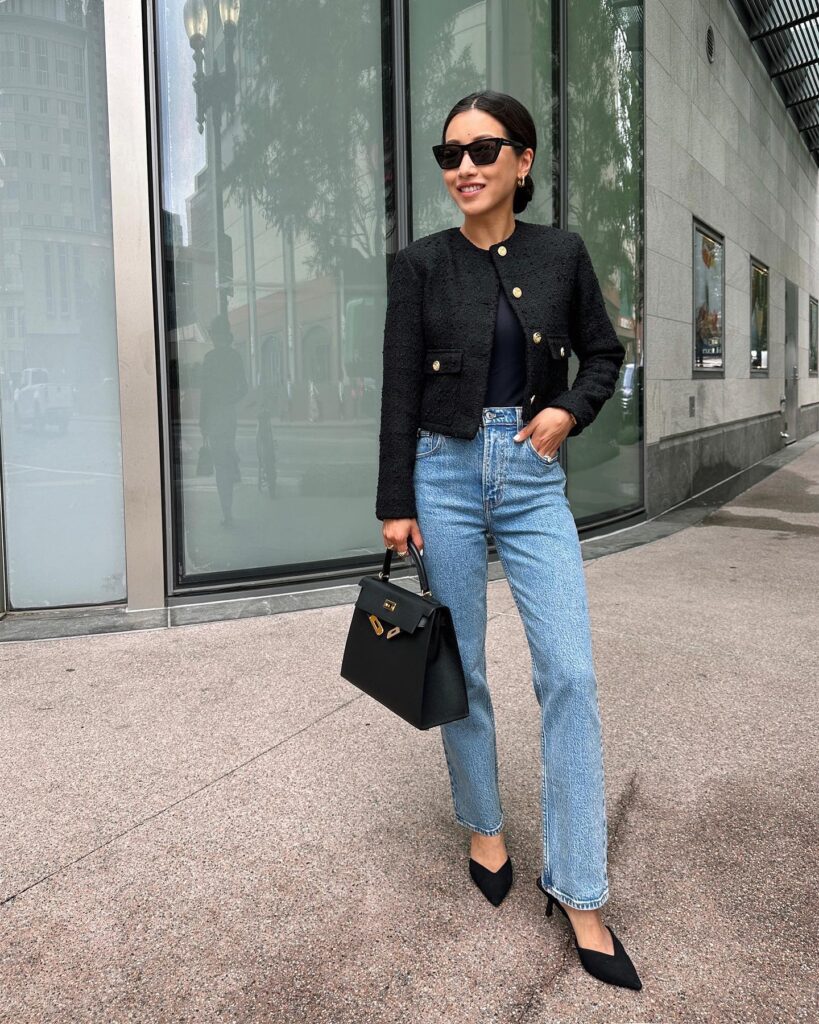
A cropped tweed jacket paired with straight leg jeans is the easiest formula on this list to get wrong, because most straight jeans are cut for a longer torso and end up pooling at the ankle. The fix isn’t the jacket, it’s the hem. Get the jean hemmed to just kiss the top of a kitten heel and the whole silhouette snaps into place.
A cropped jacket only reads polished on a petite frame when the pant hem is precise, not just short.
Keep the base layer simple, a fitted rib tank in a dark neutral, so the eye reads one clean column from jacket to jean instead of three competing pieces. A structured top handle bag in the same black as the jacket ties the whole look together without adding visual weight anywhere near the waist.
8. The One Trouser, Two Ways Formula
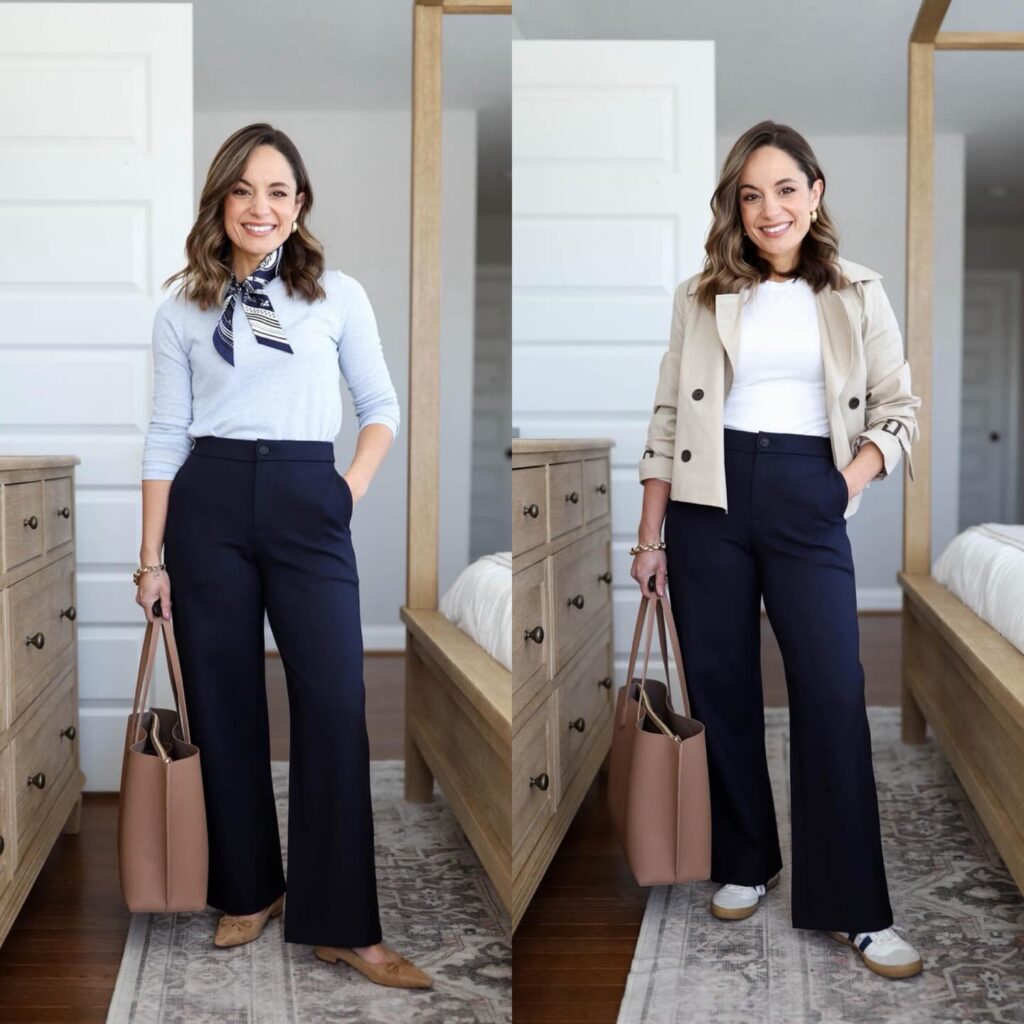
Wide leg navy trousers pull double duty here, dressed up with a scarf and heeled mule for the office, then dressed down with a trench and sneakers for the weekend. The trouser stays constant. Everything else shifts. That’s the real formula: find one bottom that hits right at your ankle bone and build both a polished and a casual top half around it instead of buying separate pants for separate moods.
Hem the trouser to break right at the shoe.
Keep the top tucked so the waist stays visible under a jacket.
A trouser hem that stacks or pools at the ankle.
A trench worn long enough to hide the waist entirely.
The neutral tan bag repeats in both looks too, which is its own small lesson. One good structured bag in a warm neutral works with nearly anything you build around it.
9. The Tucked Cardigan, High-Waist Trouser Formula
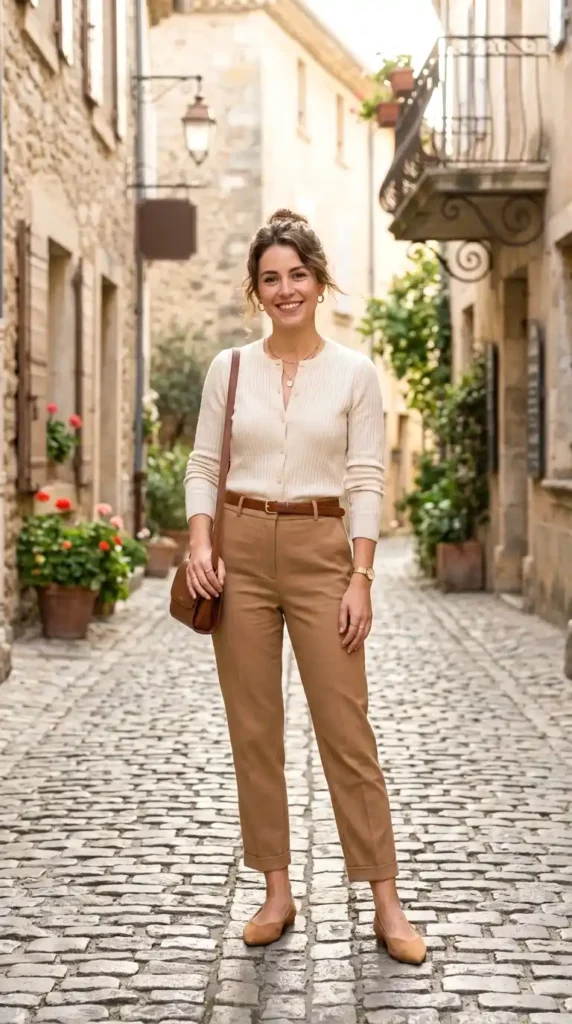
A fine knit cardigan tucked into high-waist trousers and left unbuttoned at the very top does more waist definition work than a belt ever could. The trick is tucking only the front panel loosely, not the whole hem, so there’s a soft blouse effect instead of a flat tucked-in look.
Base: fine knit cardigan, front tucked loose
Bottom: high-waist trouser, straight or slightly flared
Shoe: pointed flat or low heel
Petite fix: waistband sits at natural waist, never below hip bone
Gold buttons left open at the collarbone draw the eye up early, which keeps the whole look from reading top-heavy. This one works especially well for petite pear or hourglass shapes since the trouser does the leg lengthening on its own.
10. The Structured Mini Dress, Open Cardigan Formula
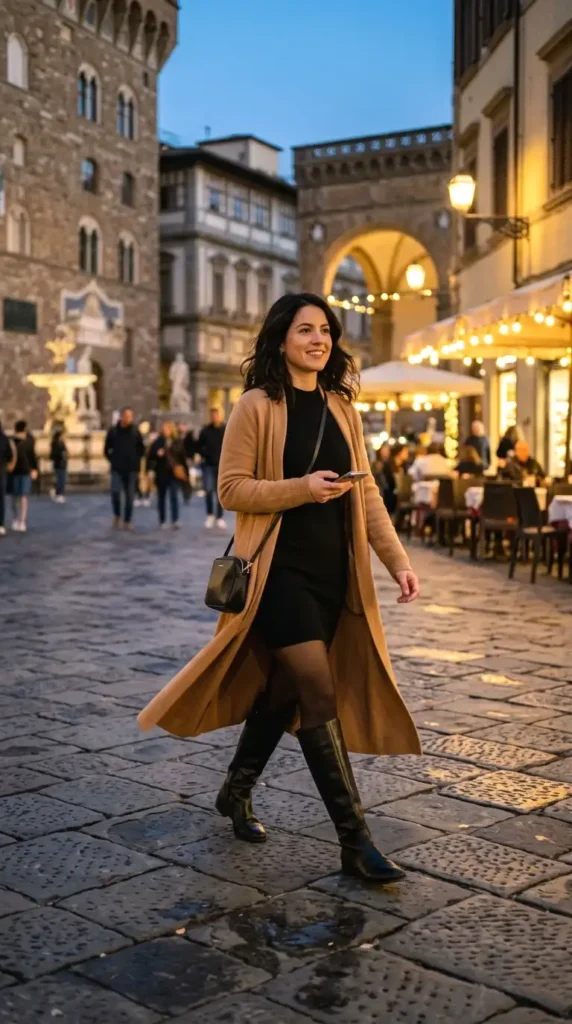
Layering a long open cardigan over a fitted mini dress solves the biggest petite dressing problem in cold months, which is losing shape under bulky layers. The dress stays visible down the front, so the waistline never disappears, while the cardigan adds warmth and length without weight.
| Piece | Why it works petite |
|---|---|
| Fitted mini dress, defined waist | Keeps the silhouette visible under the layer |
| Long open cardigan, unbelted | Adds vertical length without adding bulk |
| Tall boot, slim shaft | Continues the leg line past the dress hem |
| Small crossbody bag | Sits at the hip, doesn’t interrupt the waist |
The cardigan hem should land at or just below the dress hem, never mid-thigh, or it cuts the leg line in the wrong spot. This formula reads polished for dinner and still works thrown over jeans on a weekend.
11. The Pleated Mini Skirt, Fitted Turtleneck Formula
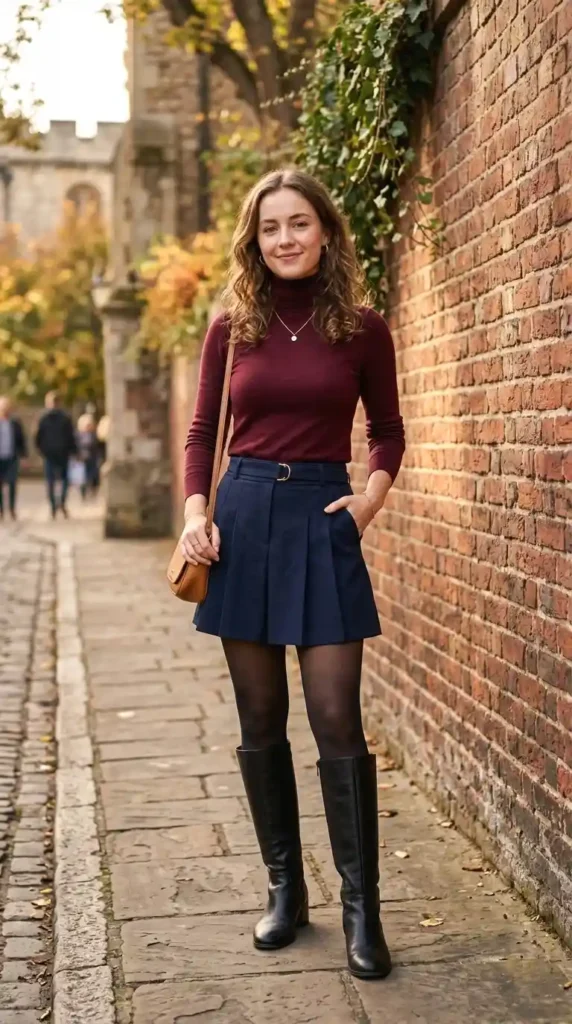
Vertical pleats do a lot of quiet work on a petite frame because every pleat line runs straight down, which reads as height even in a short skirt. Pair the pleats with a fitted turtleneck tucked in, and the whole outfit becomes one long vertical read from collarbone to knee.
Pleats create vertical lines that make a short skirt read taller than the hemline suggests.
Tall boots that hit just below the knee close the gap between skirt and shoe completely, so there’s no bare leg break to shorten the line. Keep the turtleneck fitted, not oversized, or the top half will overwhelm the pleated bottom.
12. The Cropped Puffer Vest, Wide Leg Jean Formula
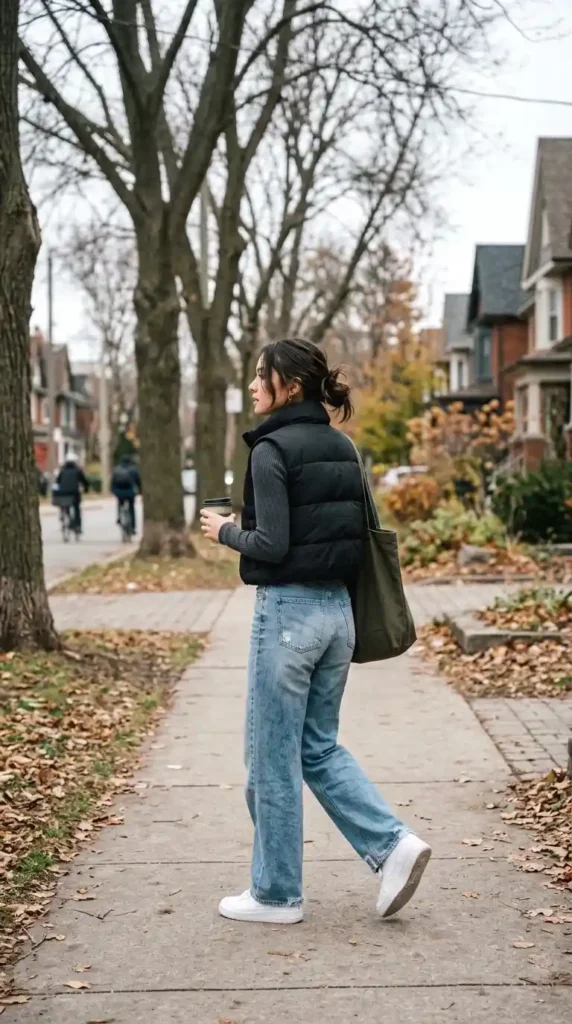
A cropped puffer vest layered over a fitted long sleeve top solves the bulk problem that ruins most winter petite outfits. Full puffer jackets add width at exactly the wrong spot, but a cropped vest stops at the waist and lets the wide leg jean do the volume work down below instead.
Choose a vest that ends right at the waistband.
Keep the base layer fitted and tucked.
A vest that hits below the hip.
A boxy top underneath that adds extra width.
This one earns its place on cold days that don’t call for a full coat. It reads intentional instead of like a jacket you forgot to zip.
13. The Belted Wrap Dress Formula
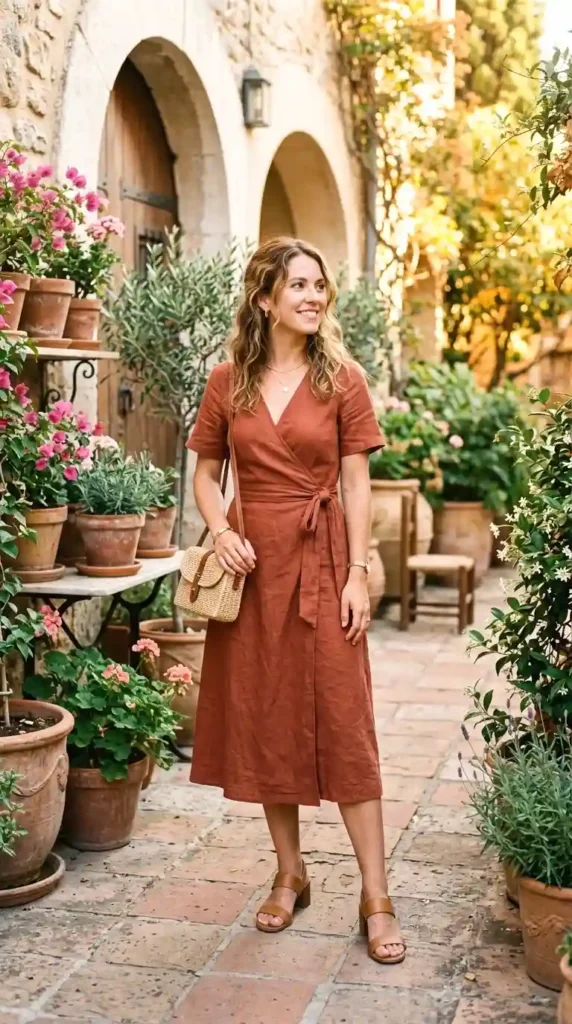
A wrap dress does the waist definition automatically, but the belt still matters more than people think. Pull the tie snug and knot it slightly off center instead of dead center, and the asymmetry keeps the eye moving instead of settling flat across the middle.
Base: wrap dress, knee length or above
Tie: knotted slightly off center, not centered
Shoe: block heel or pointed flat
Petite fix: hem should hit above the knee, not mid-calf
A mid-calf wrap dress is the one version of this formula to avoid entirely on a shorter frame, since it cuts the leg at the widest part of the calf and shortens everything below it.
14. The Belted Jumpsuit Formula
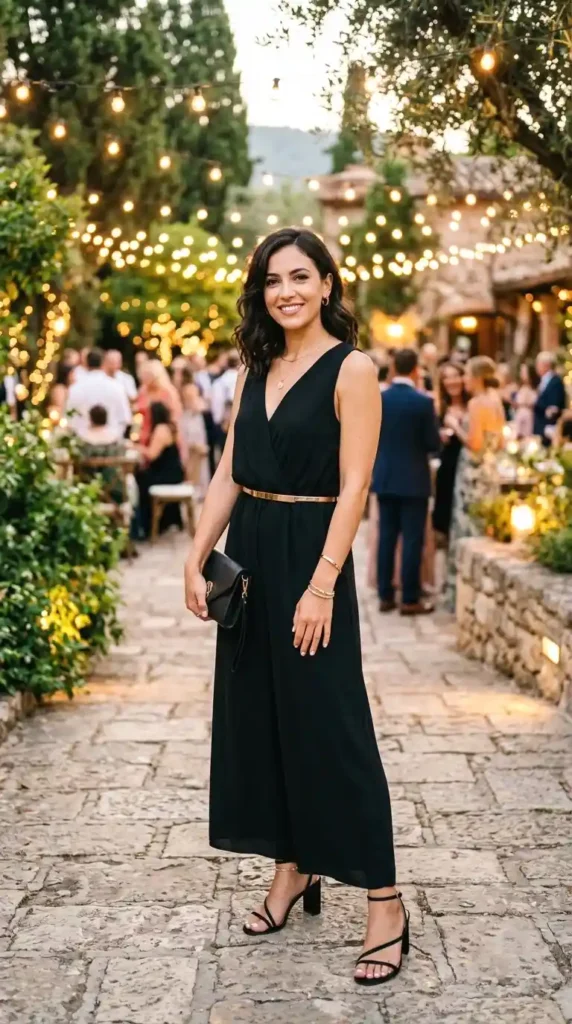
One piece, one belt, done. A jumpsuit with a defined waist tie removes the guesswork of matching a top to a bottom, and because it runs as one column from shoulder to ankle, it naturally elongates a shorter frame more than almost any two-piece outfit can.
| Piece | Why it works petite |
|---|---|
| Wide leg jumpsuit, tapered waist | One continuous vertical line, no visual break |
| Thin fabric belt, matching or contrast | Marks the waist without adding bulk |
| Heeled sandal, strappy | Elongates from ankle to floor |
Get the jumpsuit hemmed so the leg opening just grazes the top of the shoe. Too much fabric pooling at the ankle is the one thing that can undo all that vertical length in an instant.
15. The Paperbag Waist Trouser Formula
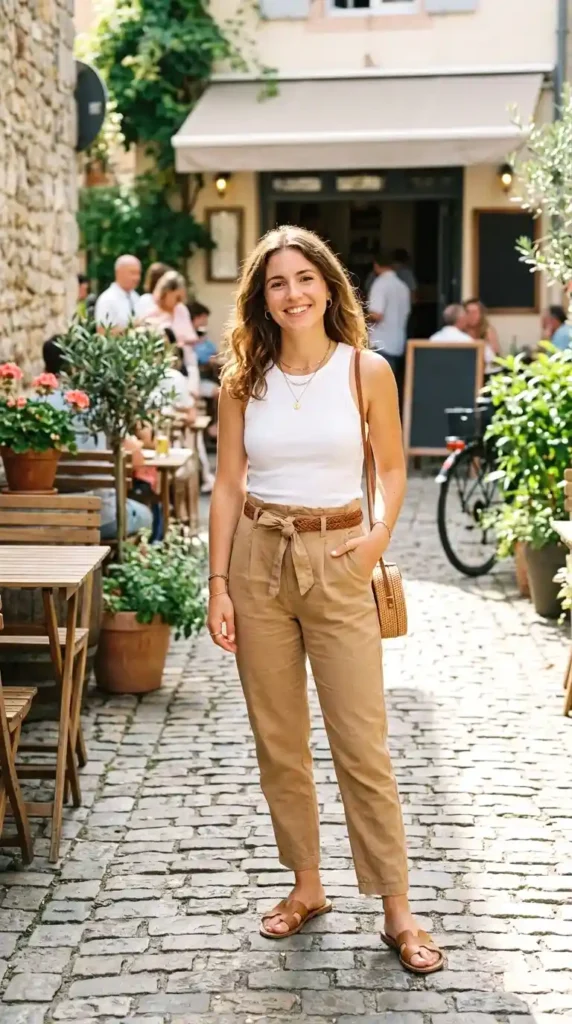
Paperbag waist trousers look intimidating on a small frame because of all that extra fabric gathered at the top, but the gathering is exactly what creates a waist when tucked with a fitted tank and cinched tight. Loose gathering with no definition is the mistake. Tight gathering with a visible belt is the fix.
A cinched paperbag waist creates a defined waistline that a plain trouser can’t.
Pick a fitted tank in a solid color so the eye isn’t distracted from the waist detail. Save the pattern or texture for the trouser itself, since two busy pieces at once will cancel out the waist definition you worked to create.
16. The Blazer-As-Dress Formula
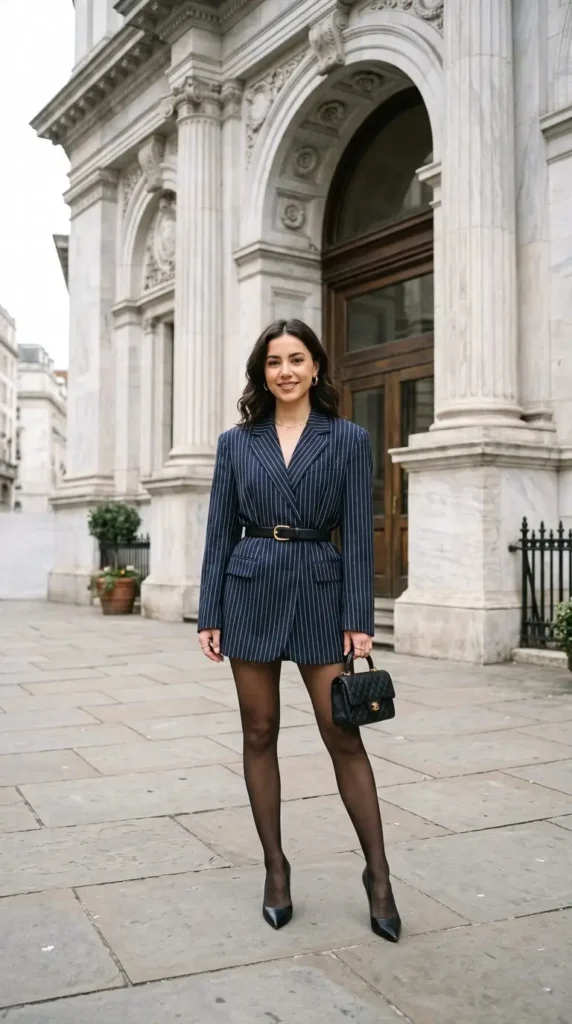
An oversized blazer worn belted as a dress instead of over pants is one of the most underused petite hacks out there. The trick is length. It needs to hit mid-thigh, not knee length, or the proportions flip from polished to swallowed.
Cinch a thin belt at the natural waist.
Let the hem hit mid-thigh, above the knee.
A blazer long enough to hit the knee.
Wearing it unbelted and shapeless.
Sheer tights and a pointed pump underneath finish the leg line so it doesn’t feel like you’re just wearing a jacket and forgot the rest of the outfit.
17. The Cropped Denim Jacket, Midi Skirt Formula

Pairing a cropped denim jacket with a flowy midi skirt puts the proportion break exactly where it needs to be on a petite frame, right at the natural waist, instead of the mid-hip break most denim jackets default to. That inch or two makes a bigger difference than it sounds like it should.
Base: fitted tank, tucked
Layer: cropped denim jacket, ends at natural waist
Bottom: flowy midi skirt, fitted waistband
Shoe: ankle strap heel or pointed mule
A midi skirt with a fitted waist rather than an elastic one keeps the proportion clean under the jacket. Elastic waistbands tend to bunch and blur the line the jacket is trying to create.
18. The One-Shoulder Top, Straight Trouser Formula
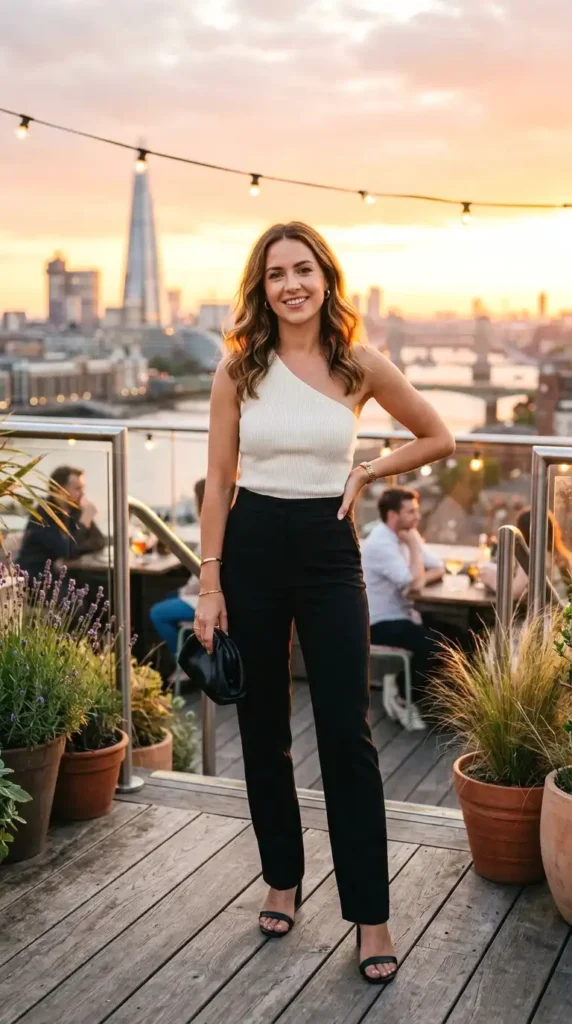
Asymmetry at the shoulder does something a symmetrical neckline can’t. It pulls the eye up and to one side instead of straight across, which breaks up the horizontal read that makes a small frame look boxy. Paired with a simple straight trouser, the top carries all the visual interest so the bottom half can stay quiet.
| Piece | Why it works petite |
|---|---|
| One-shoulder fitted top | Diagonal neckline breaks up a boxy top half |
| Straight leg trouser, high waist | Simple line lets the top do the work |
| Statement earring | Keeps the eye moving up, not down |
Keep jewelry minimal everywhere except the ears. Too many accents will compete with the neckline for attention and flatten the whole effect.
19. The Vertical Stripe Shirt Dress Formula
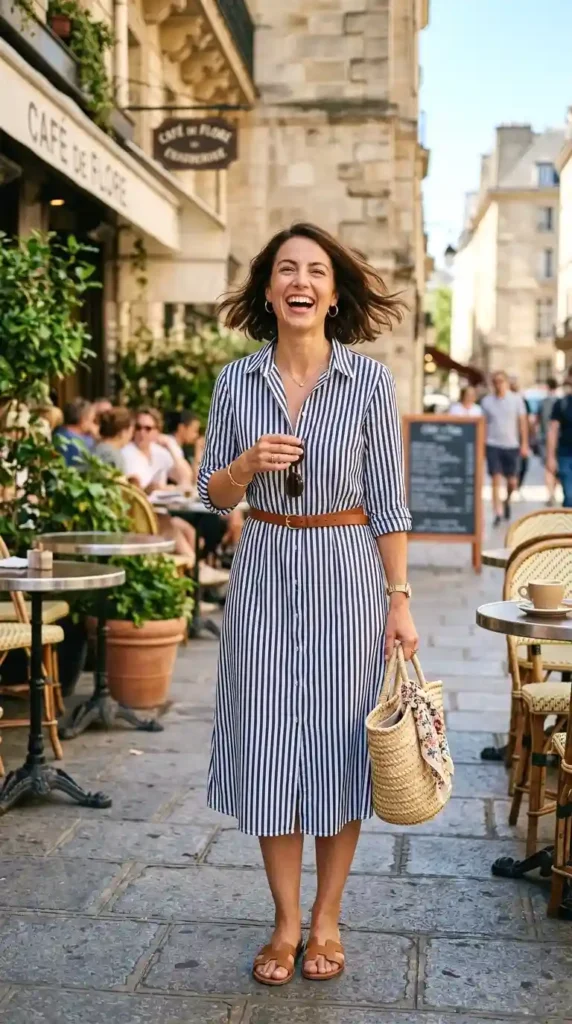
A vertical striped shirt dress belted at the waist is one of the simplest formulas here, and one of the most reliable. The stripes do automatic length work, and the belt does the automatic waist work, so there’s very little room to get this one wrong.
Vertical stripes plus a defined waist create height with almost no styling effort.
Choose a thinner stripe over a wide one. Wide stripes can actually work against you by adding visual width instead of length. Roll the sleeves once at the cuff to keep the arms from disappearing into extra fabric.
20. The High-Waist Shorts, Long Open Cardigan Formula

Shorts and a long cardigan sound like a strange match for a petite frame at first, but the formula works because the cardigan’s length is deliberate, not accidental. It hangs open well past the shorts hem, so what shows underneath is a thin strip of bare leg into a tall boot, not a full leg cut off at the thigh.
Choose a cardigan that hits mid-thigh or longer.
Pair with a tall boot to close the leg gap.
A cardigan that stops at the hip.
An ankle bootie that leaves too much bare leg showing.
This one bridges seasons well, which makes it worth the closet space. It works in early fall over tights and again in late spring bare legged.
Conclusion
That’s the full list, twenty ways to work with a shorter frame instead of around it. The common thread through all of it is proportion: where a hem lands, where a waist gets marked, where a vertical line can do the lengthening for you. None of these formulas require buying a whole new wardrobe. Most just need a tailor, a belt, or a slightly different way of tucking something you already own. Save this pin so you’ve got it the next time you’re standing in front of your closet unsure what to reach for.